Publications

BASIC reports and briefings offer authoritative analysis and innovative recommendations to help countries make meaningful progress on nuclear disarmament, arms control, and non-proliferation.

Discover our latest publications below

Our most recent

2026 Publications

tpnwreportfrontpage e1780139966887

Report: Preparing for the First Review Conference of the Treaty on the Prohibition of Nuclear Weapons: An Analysis of the TPNW’s Implementation and Potential for Impact

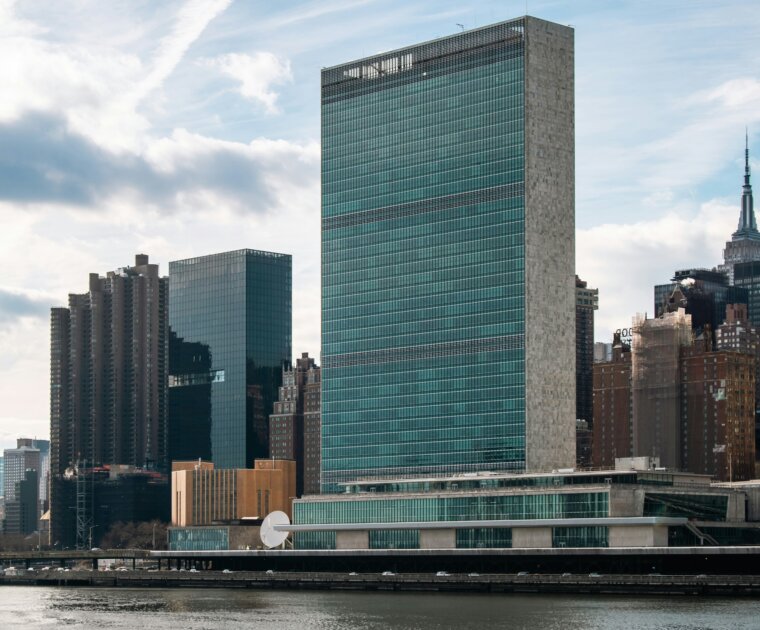
BASIC is pleased to publish a new report by Dr Laura Rose Brown examining implementation of the Treaty on the Prohibition of Nuclear Weapons (TPNW) ahead of the treaty’s First Review Conference, scheduled to take place at the United Nations Headquarters in New York in late 2026.

tpnwbrieffrontcover e1780140077493

Brief: Defining Success at the First Review Conference: Advancing Articles 6 and 7 of the Treaty on the Prohibition of Nuclear Weapons

BASIC is pleased to publish a new policy brief by Dr Laura Rose Brown as part of our project examining the implementation of the Treaty on the Prohibition of Nuclear Weapons (TPNW) ahead of the treaty’s First Review Conference, scheduled to take place at the United Nations Headquarters in New York in late 2026.

spirargg e1779862104382

Report: Addressing Future Nuclear Crisis Scenarios in South Asia through a Responsibility-Based Approach

This report is a product of two Track 2/1.5 dialogues involving two crisis simulations that were facilitated by BASIC’s Responsibilities and Global Governance Programme with participants from Indian and Pakistani nuclear policy communities in Bahrain in February 2026.

wpimage2

Working Paper: Strengthening Dialogue in the Non-Proliferation Treaty: the Nuclear Responsibilities Approach

The Centre for Policy, Conflict and Co-operation (CPCCR) at the University of Stirling and BASIC have submitted a working paper, authored by Dr Megan Dee, “Strengthening dialogue in the Non-Proliferation Treaty: the nuclear responsibilities approach”, to the 2026 Review Conference of the Parties to the Treaty on the Non-Proliferation of Nuclear Weapons.

2025 Publications

image 1

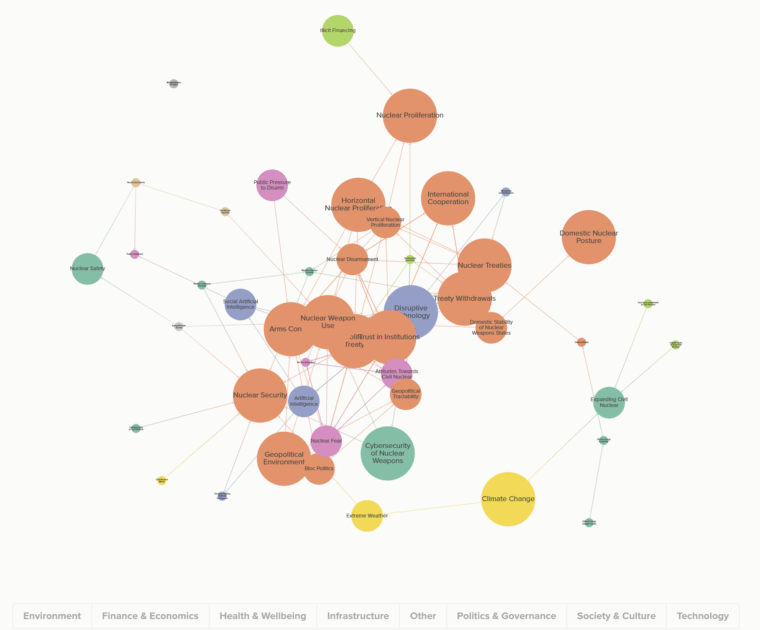
Report: Envisioning The Future Of Nuclear Security

Envisioning the Future of Nuclear Security, by BASIC Policy Fellow Declan Penrose, is the culmination of work started by BASIC’s Emerging Voices Network (EVN) in 2023, when foresight methodologies were first used to envisage multiple possible nuclear weapons futures during the launch of our “Desiloing Existential Threats II” policy cycle.

christopher burns Kj2SaNHG hg unsplash 1

Report: Emerging and Disruptive Technologies in South Asia: Perceptions of Risks and Responsibilities in Crisis Management and Prevention

Emerging and Disruptive Technologies in South Asia: Perceptions of Risks and Responsibilities in Crisis Management and Prevention explores the impact of Emerging and Disruptive Technologies (EDTs) on crisis prevention and management in South Asia.

2024 Publications

pawel czerwinski prMn9KINLtI unsplash 1

Report: The Nuclear Responsibilities Primer: Exploring Perspectives on Nuclear Responsibilities within the Non-Proliferation Regime

This primer explores how Nuclear Weapon States and Non-Nuclear Weapon States have invoked the concept of “responsibility” in the context of the NPT, analysing its evolving use to address security challenges, foster shared norms, and promote collaborative efforts for nuclear risk reduction amidst rising threats and strained global relations.

USE THIS ONE HI Policy Cycle Comms Image 3

Report: NATO and Climate Change: Towards a Joint Understanding and Response

This report shows that different states have different approaches to climate change and security. It suggests that some states still consider climate change effects on security of less importance than traditional considerations, or perhaps that some states believe that adapting their war fighting ability to the effects of climate change is detracting from its primary responsibility of protecting and defending the state. 

USE THIS ONE 2023 Website Headshots 1 2

Report: Crisis Prevention and Management in South Asia: Mutual Confidence, Risk, and Responsibility

‘Crisis Prevention and Management in South Asia: Mutual Confidence, Risk, and Responsibility’ emerged from a series of dialogues with the Indian and Pakistani nuclear policy communities at the Track 2 / 1.5 level held by the BASIC-ICCS Programme on Nuclear Responsibilities in 2023-2024. 

2023 Publications

Image Report cover 1 scaled e1689086515630

Anthology: De-siloing Existential Threats: Challenging Identity, Power, and Inclusivity in the Nuclear Policy Field

Read the Emerging Voices Network’s (EVN) latest report, in which five EVN Working Groups provide a range of policy recommendations and valuable insights into the current challenges and issues that concern emerging researchers and young professionals in the nuclear policy field.

India Pakistan Border Wagha 15027737723

Compendium: Crisis Communications: Indian and Pakistani Perspectives on Responsible Practices

‘Crisis Communications: Indian and Pakistani Perspectives on Responsible Practices’ is a compendium of essays written by Indian and Pakistani nuclear policy experts and journalists that explore how the two countries can communicate in ways that help prevent crisis escalation at different levels of interaction. Edited by Rabia Akhtar, Chiara Cervasio, Ruhee Neog, Alice Spilman, and Nicholas J. Wheeler.

chaitanya maheshwari 5JNeCS8MLUQ unsplash

Report: Exploring Nuclear Risk Reduction Pathways in Southern Asia through Nuclear Responsibilities

In March 2023, BASIC and the Institute for Conflict, Cooperation and Security (ICCS) at the University of Birmingham organised ‘Nuclear Responsibilities and Nuclear Crises in Southern Asia: Preventing Escalation through a Responsibility-Based Regime in the Asia-Pacific’. Read the report here.

2022 Publications

marek studzinski gk8BqMhYrw unsplash 1

Report: Clashes of Perceptions: Bridging Perspectives on Security in Europe

Over the past 18 months, BASIC has undertaken in collaboration with the Ministry of Foreign Affairs of the Netherlands, Phase 2 Applying as Systematic Approach to NATO-Russia Risk Reduction that aimed at advancing the understanding of workable options for risk reduction and fostering new relationships between NATO and Russia.

alexandr bormotin UPoSvgmFKmo unsplash

Report: Risks and Risk Reduction: A View from the South-eastern Flank

In September 2022, BASIC held a track 1.5 workshop in Sofia to discuss risk and threat assessments in South-eastern and Northern Europe. The workshop is part of the two-year project ‘Phase 2: Applying a Systematic Approach to NATO-Russia Risk Reduction’ that BASIC is undertaking in collaboration with the Dutch Ministry of Foreign Affairs.  

2021 Publications

2020 Publications

daniele levis pelusi 88q5y8oHQto unsplash 1

Report: Nuclear Responsibilities – A New Approach for Thinking and Talking about Nuclear Weapons

We seek in this report to suggest ways, and crucially propose a new method, to gradually shift the nature of the contemporary global conversation on nuclear weapons away from one characterised by rights, blame, and suspicion towards one framed by responsibility, empathic cooperation, and even trust.  

2019 Publications


Read our publications from 2019. Our reports cover developments in the Stepping Stones Approach to Nuclear Disarmament, strategic risk reduction, and the Nuclear Responsibilities framing.

Houses of Parliament

Parliamentary Briefing: House of Lords Debate on ‘Rising nuclear risk, disarmament and the Nuclear Non-Proliferation Treaty’

This parliamentary briefing was issued in advance of the Debate on the report from the International Relations Committee ‘Rising nuclear risk, disarmament and the Nuclear Non-Proliferation Treaty’, Tuesday, 16th of July 2019. This is an opportunity to consider the ways in which the UK can reduce nuclear risks globally, and engage in meaningful multilateral disarmament processes ahead of the 2020 Non-Proliferation Treaty Review Conference.

landscape water nature pathway rock countryside 729979 pxhere.com

Report: Stepping Stones to Disarmament – Making Progress in a Polarised International Climate

The Stepping Stones Approach seeks to engage all members of the international community in a cooperative and inclusive process that nudges the nuclear possessor states away from arms racing dynamics and in a more positive direction, with the intention of reducing the salience of nuclear weapons in postures, achieving incremental disarmament and progressively building up the capacity for further steps.

15988864759 e1b7d360ff k

Report: Reporting on Nuclear Disarmament – Success and Failure in 25 Years of Disarmament Diplomacy

Nuclear disarmament has fallen off the public agenda. Media attention is sporadic and reactive, focusing on short-term trends like summits with North Korea or sanctions on Iran. But the longer-term process of global disarmament rarely features in the news cycle and where there is reference it is treated with disdain as unrealistic. This has serious costs to public engagement and democratic accountability.

2018 Publications


Read our publications from 2018. Our reports from this period include analysis of the implications of the Trump Administration on US nuclear policy, the costs associated with UK Trident submarines, and the Responsibilities programme’s first roundtables.

Hiroshima centre of explosion

BASIC Annual Report 2017

2017 was a tough year for nuclear disarmament and non-proliferation. Read our latest Annual Report to find out how we worked towards creating a world free of the risk of nuclear weapons over now the course of 2017.

Current Programmes

BASIC believes in making progress on nuclear disarmament, arms control, and non-proliferation through multiple complementary approaches. We continuously develop our programmes – streams of research – through sustained engagement with a wide range of stakeholders, collectively searching for the art of the possible.

Our current programmes are listed below. Browse our current programmes page by clicking here.