
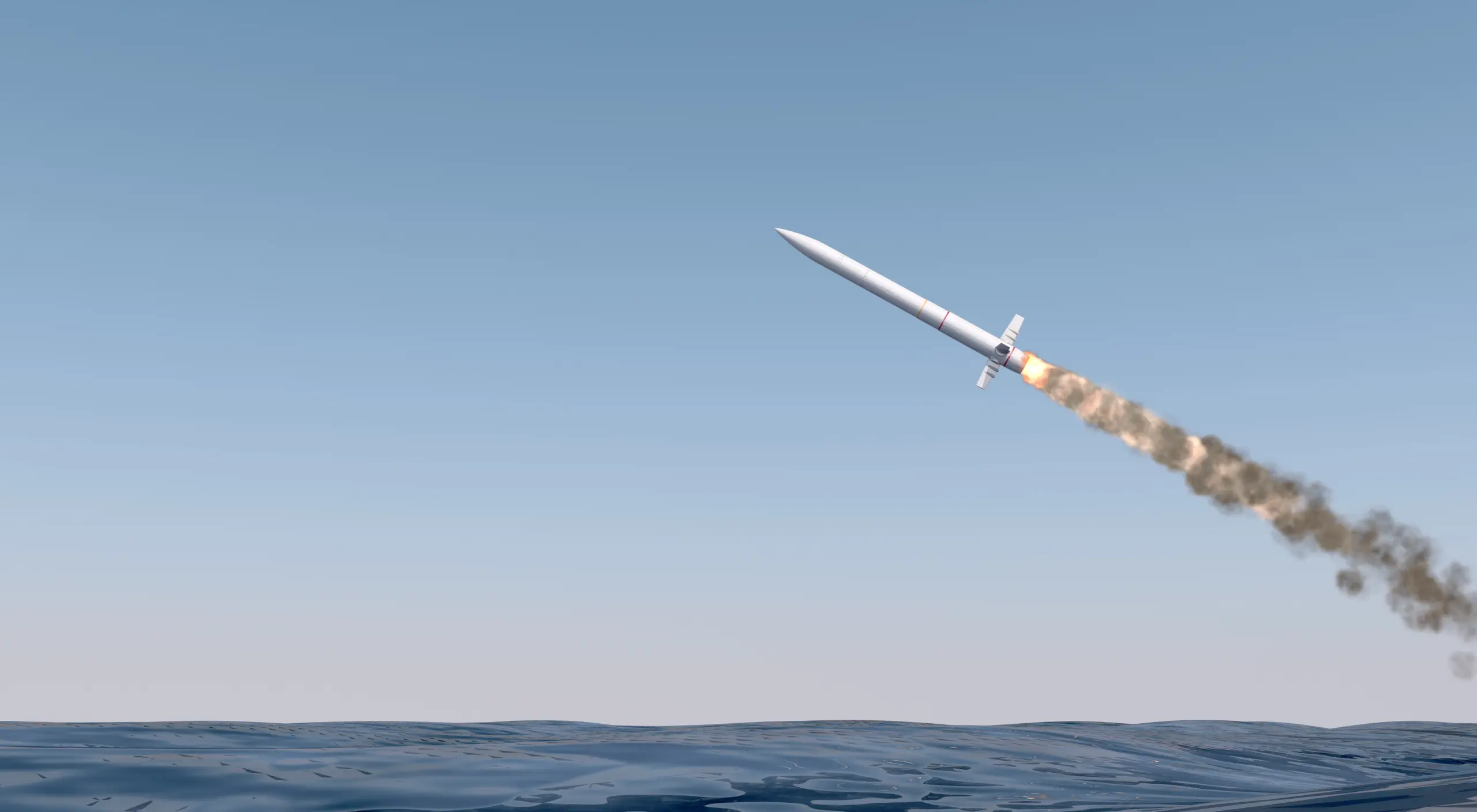
BASIC’s Policy Fellow Eva-Nour Repussard has this assessment of ballistic missile proliferation and the transfer of capabilities to non-state actors.
In recent years, the diffusion of ballistic missile technology to non-state actors (NSAs) has evolved from a peripheral concern to a central challenge in global security. This issue, once confined to theoretical debates, has now recently materialised in conflict zones from the Middle East to the Red Sea.
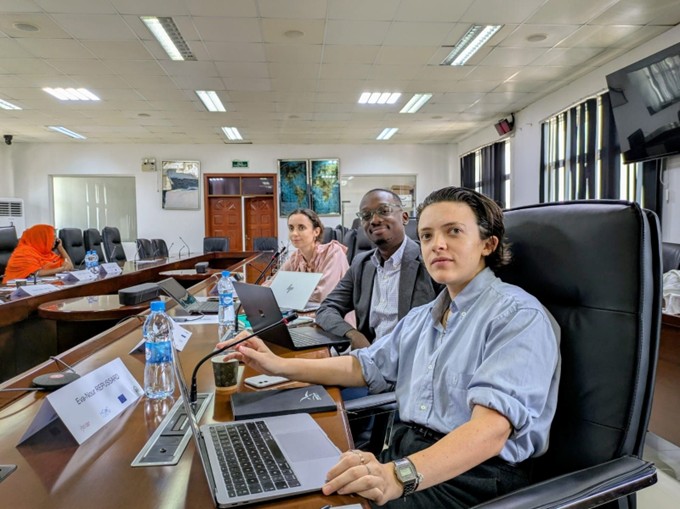
I recently had the opportunity to address this topic at a side event at the Annual Regular Meeting of the HCoC at the United Nations in Vienna, and during a regional dialogue held in Djibouti, where discussions focused on the contemporary dynamics of ballistic missile proliferation and their implications for regional stability. My presentation drew from joint research conducted with Zuzanna Gwadera from the International Institute for Strategic Studies (IISS), as part of the HCoC Youth Group organised by la Fondation pour la Recherche Strategique (FRS) and funded by the European Union. My presentation examined how and why such capabilities are being transferred to non-state actors, and what this means for the international order.
Session 2: Prolifération des Missiles Balistiques – Enjeux Contemporains, Djibouti, September 2025
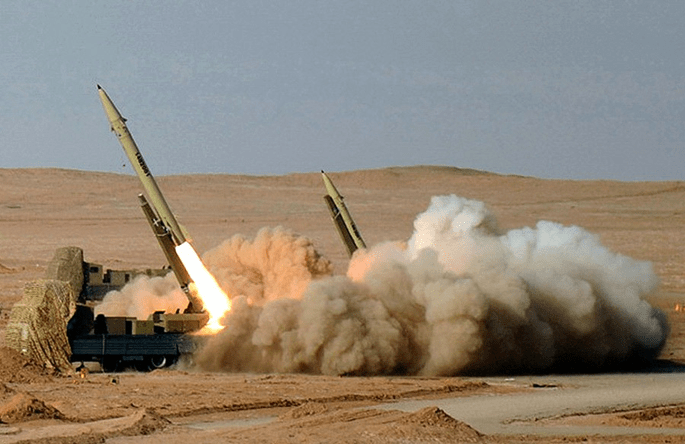
Iran’s transfer of missile-related components or know-how to allied non-state actors has been repeatedly documented in UN and open-source reporting, noting that Houthi forces have deployed ballistic missiles with design features and production methods consistent with Iranian systems. Whilst Tehran officially denies direct transfers, these technical similarities suggest at least a level of facilitation, whether through the provision of components, expertise, or blueprints.
For Iran, proliferating missile technology to proxies such as the Houthis offers several strategic advantages. It enables power projection by proxy, allowing states to pursue their geopolitical objectives indirectly while avoiding direct confrontation. This outsourcing of coercion provides plausible deniability and maintains operations below the threshold of open war.
At the same time, these proxy relationships create opportunities to test missile systems in live conflict environments. By observing missile performance under real operational conditions—including against Western air defences such as the Arrow 3—states can refine their designs, enhance survivability, and improve guidance technologies. This feedback loop between proxy use and domestic development is accelerating the evolution of missile capabilities worldwide.
For non-state actors themselves, the motivations differ but are no less strategic. Ballistic missiles offer a rare form of force multiplication, enabling actors with limited conventional strength to strike distant, high-value targets. Such capabilities also serve political and symbolic purposes: projecting power, asserting legitimacy, and influencing both internal and international audiences.
Even when missile attacks are intercepted, their psychological and economic effects can be significant. The Houthi strikes targeting Israel and commercial shipping in the Red Sea, for instance, have disrupted global trade routes, driven up insurance costs, and prompted multinational naval responses. In this sense, even unsuccessful launches can achieve strategic objectives: they signal capability and intent, impose financial and operational costs on stronger adversaries, and attract political attention disproportionate to their material impact. This dynamic illustrates how, in modern asymmetric warfare, tactical failure can still translate into strategic success.
The international community now faces the urgent task of adapting its non-proliferation frameworks to meet this evolving threat. Instruments such as UN Security Council Resolution 1540, initially designed to prevent the spread of weapons of mass destruction and their delivery systems, could provide a legal foundation for addressing advanced conventional missiles as well. Another relevant mechanism is the Hague Code of Conduct against Ballistic Missile Proliferation (HCoC), a voluntary, transparency and confidence-building instrument through which subscribing states commit to restraint in ballistic missile development and to regular information exchanges on their policies and launches. Whilst it does not cover non-state actors, broader regional adherence, particularly in the Middle East, could help reduce misperceptions, improve early warning, and strengthen norm resilience against missile escalation.
The proliferation of ballistic missiles to non-state actors exposes a widening gap in international security governance. Addressing it will require not only defensive adaptation, but also renewed diplomatic and regulatory engagement. Without such efforts, the line between state and non-state military capabilities will continue to blur—heightening risks of miscalculation, escalation, and instability across multiple regions.
This op-ed draws from findings from the article “Drivers of Missile Proliferation to Non-State Actors” co-authored with Zuzanna Gwadera at the International Institute for Strategic Studies (IISS), from the report Overcoming current and future challenges linked to missile proliferation: Prospective analysis and possible ways forward for the HCoC, funded by the European Union.