
If Scotland votes yes for independence this week, the chances of the UK having to disarm its nuclear arsenal rise dramatically–and the global non-proliferation regime needs just such a shot in the arm. But even a close no vote should be cause for reassessment over the future of Trident.
Search Results for: press
NATO-Russia: Time for a change in direction
NATO heads of state meet in Newport, south Wales for their summit at the end of this week. The relationship with Russia will dominate the agenda—the only question being how far member states are openly willing to go to face down Moscow in the conflict over Ukraine.
Knowledge, Accessibility and Awareness of Nuclear Weapons
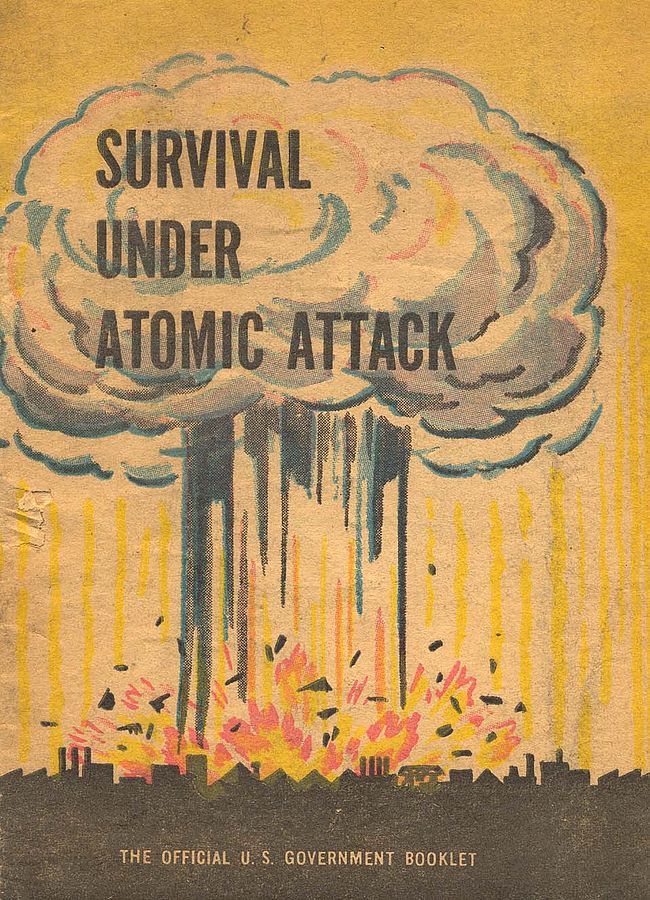
In the early 1980s, a number of educators and organizations sought to bring a highly controversial issue back into American classrooms: nuclear weapons. Unlike their parents’ generation, students would not be learning how to “duck and cover” in the event of a nuclear attack but would discuss the choices involved in averting nuclear warfare.
TacNukes News No. 10
TacNukes News summarizes recent developments and resources covering tactical nuclear weapons (TNW) in Europe. In this edition of TacNukes News, the political and security environment relevant to making progress on tactical nuclear weapons arms control continued to deteriorate as Russia-U.S. relations worsened and the Ukraine crisis showed no signs of winding down.
What’s ahead for the United States and the United Kingdom?
Tomorrow the U.S. Senate Foreign Relations Committee will host a hearing on the P5+1 negotiations with Iran. Witnesses will include Wendy Sherman, Under Secretary of State for Political Affairs and the U.S.’ lead negotiator on the Iran nuclear talks, and David Cohen, the Treasury Department's Under Secretary for Terrorism and Financial Intelligence. Last weekend the six-month deadline (July 20th) for the interim Joint Plan of Action passed without a final deal being reached.
What’s behind the deepening US-UK nuclear weapon cooperation?
The Mutual Defense Agreement (MDA) lies at the heart of the special nuclear relationship between the United States and United Kingdom. The nuclear relationship set up by the MDA is seen to be beneficial to both the US and UK by cementing the bilateral relationship in sharing of nuclear weapons technology, as well as enshrining a certain uneven power structure in law.
Iran: beyond the concessions and expectations
What will it take for negotiating parties to reach a lasting deal over Iran's nuclear programme–and what does it mean for the non-proliferation regime?
TacNukes News
This newsletter is published by BASIC.
TacNukes News No. 6 and earlier editions were jointly published in cooperation with the Arms Control Association and the Institute for Peace Research and Security at the University of Hamburg. BASIC currently works with the German Institute for International and Security Affairs (SWP) under a joint project funded by the William and Flora Hewlett Foundation.
Click the link below to see the TacNukes News updates: