Whether you support or oppose them, nuclear weapons have become an entrenched part of the British security discussion, with periods of major debate – in the 1960s and 1980s especially – leaving a lasting impact on the national psyche. But it’s rare that we have the chance to see governments – in the UK or elsewhere – step back and engage in truly forward-thinking, public consideration of why that is the case, and what the alternatives might be. This could be one of those moments for the UK. Could. Whether it will or not, remains to be seen.
Analysis
Egypt & the Middle East – Stability through Fairness
While we are witnessing ever-more violent clashes on the streets of Cairo, and Egyptians now contemplate their next moves in the long and faltering steps towards democracy, few are now thinking much about the regional efforts to establish a process with the objective of creating a zone free of WMD.
Counting on Nuclear Non-Proliferation
Today is the 45th Anniversary of the Nuclear Non-Proliferation Treaty (NPT), and also this week, Wednesday marks the 20th anniversary of the U.S. Presidential announcement to extend the moratorium on nuclear explosive testing. These are admirable anniversaries, but what have they achieved?
The NPT has become the bedrock of the nuclear arms control regime, but back in 1968 when it was first signed, states had no clue how long it would last; and written into the Treaty was a 25-year lifespan.
The Great British Trident Debate: 2013 Reviews, 2014 Scottish Referendum, 2015 General Election, 2016 Main Gate Decision
The Ministry of Defence budget has avoided drastic cuts, keeping plans to increase equipment spending by 1% annually after 2015. As the government prepares to publish the Trident Alternatives Review (TAR), political debates intensify over the renewal of the UK’s nuclear weapons system. The Liberal Democrats seek more affordable, flexible alternatives, while Conservatives support a like-for-like renewal. The upcoming General Election and international commitments further complicate the issue.
Open-Ended Working Group Furthers the Disarmament Agenda in Geneva
On Thursday and Friday, the UN Open-Ended Working Group (OEWG) on nuclear disarmament meets for the third time in Geneva. The OEWG was established in December 2012, under UNGA Resolution A/RES/67/56, to develop proposals for innovative and measured steps to take forward multilateral nuclear disarmament for the achievement and maintenance of a world free of nuclear weapons.
Implications of President Obama’s Speech in Berlin and Nuclear Strategy Review
—Progress on nuclear reductions will require more successful engagement with Russia
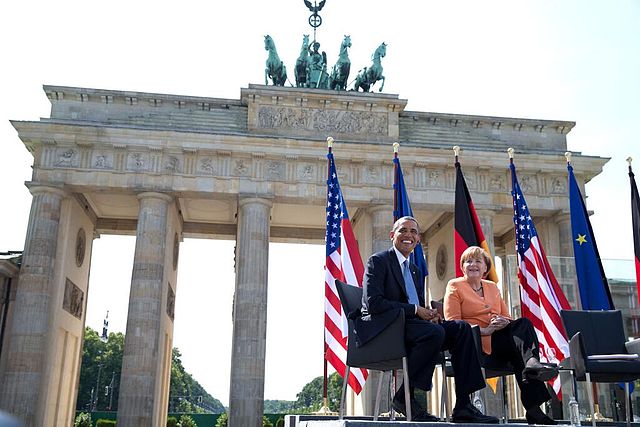
President Barack Obama set out his second term nuclear agenda on June 19, 2013 in a major speech in Berlin, and in tandem released elements of his long-awaited Nuclear Weapons Employment Strategy.
What comes next for U.S. nuclear weapons policy?
This Wednesday, President Obama is slated to give his next big foreign policy speech at the historically significant Brandenburg Gate in Berlin. It was at this Gate – an enduring symbol of both the division and subsequent unity of East and West Berlin – that Ronald Reagan urged then-General Secretary of the Soviet Union, Mikhail Gorbachev, to “tear down this wall” in 1987, and President Clinton spoke of a free and unified Berlin in 1994, following the end of the Cold War.
Ward Wilson: The Bomb Didn’t Beat Japan…Stalin Did
Ward Wilson was featured on the the front page of Foreign Policy with a popular article de-bunking the myth that the Second World War was won by nuclear weapons.