The international diplomatic, economic and intelligence conflict over Iran’s nuclear program has now been in full flow for over a decade. Few crises have lasted this long at such tempo. It has involved complex games of diplomatic poker, missed opportunities and overplayed hands. Proposals have come and gone involving careful balancing of red lines and attempts to find common interest.
Search Results for: publication
Strengthening Nonproliferation: Game-Changing Ideas
United Nations First Committee Side Event Ward Wilson and Barry Blechman discussed how to rethink the different value perceptions of nuclear weapons within an international security framework, in order to strengthen nonproliferation efforts.
Geneva talks: a fresh opportunity for Iran & E3+3 (P5+1)
The latest installment of the negotiations between Iran and the E3+3 (P5+1: United States, United Kingdom, China, Russia, France, and Germany) will resume on Tuesday and Wednesday in Geneva. Negotiations with Iran on its nuclear program are now into their 10th year, and each year brings about more disappointment and more anxiety over concerns of nuclear proliferation.
Despotism or Democracy?
As the 2015 general election and the decision on whether to replace Trident approaches, it is important to consider the implications of the continued possession of nuclear weapons for British democracy. Historically, Britain’s bomb has been dependent on US support, a relationship notable for its opacity and lack of democratic accountability.
Mr. Alexander goes to Washington
On Wednesday, Britain's Chief Secretary to the Treasury, Danny Alexander, will be in Washington, D.C. discussing the UK government's study on alternatives to the Trident nuclear weapon system, released in mid-July.
Minimum Deterrence: Examining the Examination
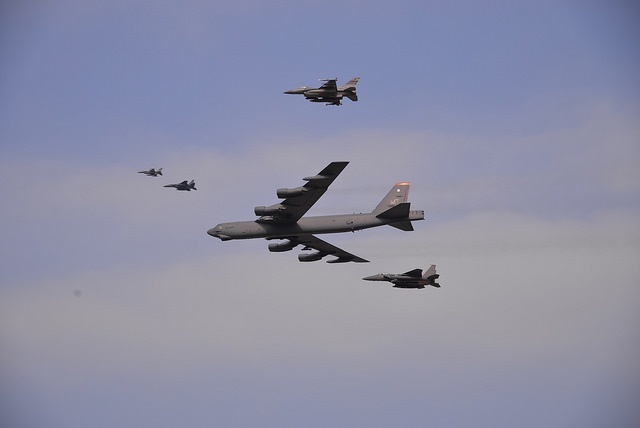
The mid-August publication of the National Institute for Public Policy’s Minimum Deterrence: Examining the Evidence has re-invigorated the debate on America’s nuclear policy and on the concept of nuclear deterrence in general: Does it make sense in the 21st century? Can a ‘Deterrence Lite’ policy, hereafter called ‘Minimum Deterrence’ (MD), really work?
TacNukes News No. 6
 A summary of news and analysis on tactical nuclear weapons.