This morning, the Scottish government published the long-awaited White Paper on Scottish Independence as promised. Scotland’s Future – Your Guide, it is hoped, will act as a comprehensive manual for an independent Scotland. But apart from formally setting out the manifesto points which have already been widely discussed, there are no new surprises concerning the future of Trident concealed within its 670 pages.
Search Results for: publication
TacNukes News, No. 7
This latest edition on tactical nuclear weapons in Europe includes news and recent articles related to the B-61 Life Extension Program in the United States and an update on developments in the Netherlands.
TNW, The Quiet Menace: How the Threats to Europe, the Middle East and South Asia are Linked
London’s International Institute for Strategic Studies (IISS; what – you haven’t applied for membership yet?) recently published their annual review of world affairs, Strategic Survey 2013. In its chapter on strategic policy issues, the Survey covers an important topic, the complex nuclear arms race underway in South Asia among India, Pakistan and China.
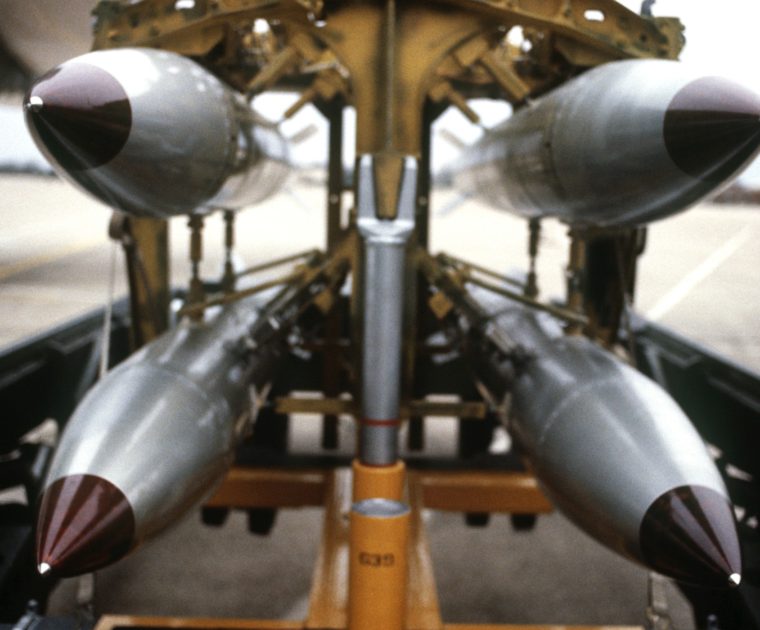
Reducing the Role of Tactical Nuclear Weapons in Europe: Joint Project
BASIC and the German Institute for International and Security Affairs (SWP) run a joint project on reducing the role of tactical nuclear weapons in Europe, supported by the William and Flora Hewlett Foundation.
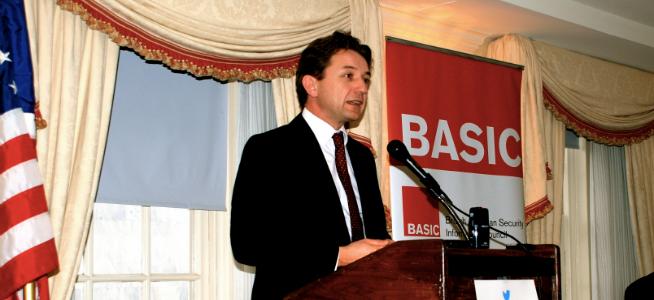
Cost and benefits to US strategic interests from UK renewal of Trident
BASIC’s last Strategic Dialogue on nuclear weapons was held on November 12 in Washington, DC.
P5+1 and Iran: finding common ground?
This week, representatives of Iran and the P5+1 (China, France, Russia, the United Kingdom, and the United States; plus Germany), also known as the E3+3, will meet in Geneva on Thursday and Friday in an attempt to make progress on resolving the standoff over Iran’s nuclear program. Anticipation is now building for some clear signs that each side is agreeing to measures that will convince the other side of intentions to follow through on a long-term game plan.
Finding a way out of the nuclear dispute with Iran: back to basics
The international diplomatic, economic and intelligence conflict over Iran’s nuclear program has now been in full flow for over a decade. Few crises have lasted this long at such tempo. It has involved complex games of diplomatic poker, missed opportunities and overplayed hands. Proposals have come and gone involving careful balancing of red lines and attempts to find common interest.
Strengthening Nonproliferation: Game-Changing Ideas
United Nations First Committee Side Event Ward Wilson and Barry Blechman discussed how to rethink the different value perceptions of nuclear weapons within an international security framework, in order to strengthen nonproliferation efforts.