
This week, eyes are on Ukraine to see whether the presidential election held on Sunday will soon lead to more stability; while many Ukrainians look ahead to the challenge of grappling with the problems that led to the crisis – both internal and external. The crisis intensified dynamics of a deteriorating relationship between NATO and Russia, where prospects had already been bleak for nuclear arms control. The crisis has even led some to call for re-emphasizing the role of nuclear weapons in transatlantic security.
Search Results for: press
Is UK disarmament quite so irrelevant?
The very quiet failure of this year’s Non-Proliferation Treaty (NPT) Preparatory Committee to agree any final document and the daunting challenge of the treaty Review Conference next year mean frustration is growing about the pace of progress by the nuclear-weapons states to disarm—so slow it feels like we are going backward.
TacNukes News No. 9
This edition of TacNukes News looks at the impact of the Ukraine crisis on the issue, and the U.S. Administration’s latest spending requests and plans for modernizing the B61 nuclear bombs.
How Do We Change the Global Nuclear Order?
Whenever diplomats get together to address the really big global issues of our time, the already daunting challenges of co-ordination are made more complex by their governments’ competing policy commitments—to economic growth (simplistically conceived), special-interest groups, “national security” and prestige.
Heeding the outcomes & remaining challenges of the 2014 Nuclear Security Summit
On March 24-25, 53 world leaders convened at The Hague for the third Nuclear Security Summit to discuss the implementation of national measures to protect vulnerable fissile and radiological material from belligerence-prone hands. The following commentary focuses on the summit’s outcomes and remaining challenges as a platform to build on for continued progress.
Can the P5 process deliver on disarmament?
The five NPT-recognised nuclear weapon states (NWS) meet in Beijing for the so-called (though misnamed) ‘P5 process’ this week, prior to the NPT Preparatory Committee in New York that starts at the end of the month. China is the last of the five to host the process, kicked off by the British in September 2009 after a speech at the Conference on Disarmament by the UK Defence Secretary, Des Browne, in February 2008.
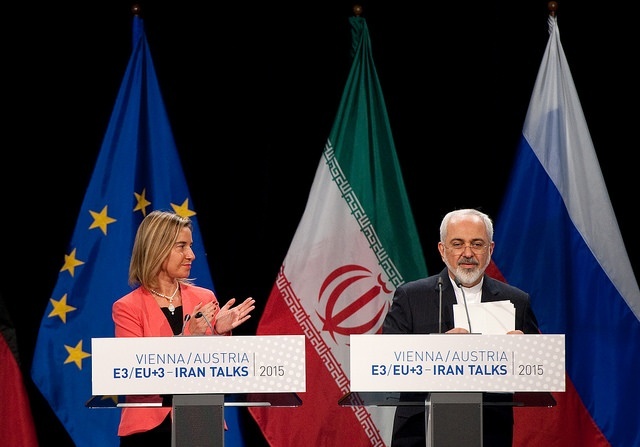
Personal political interests and the Iranian nuclear negotiations
Iran and the E3+3 will be returning to the negotiating table on April 8th to begin yet another round of high level talks on the status and future of the Iranian nuclear program. As ever, there are various causes for caution, and perhaps even concern, as the Iranians and their American and European counterparts continue to disagree on central issues such as the fate of the Arak heavy water reactor and permitted levels of nuclear enrichment.
Nuclear security: continued breakthrough or stalled progress?
On October 11, 2001, a month following the catastrophic events of 9/11, a CIA report concluded that Al-Qaeda infiltrates planned to detonate a 10-kiloton nuclear bomb at the heart of New York City. Though later deemed as a false alarm, the motivation to conduct a nuclear attack by non-state actors, combined with the widespread availability of fissile material often stored under subpar conditions,