
When Ukraine became a newly independent state after the dissolution of the Soviet Union in 1991, its future security was far from assured. Yet in 1994, an era in which nuclear deterrence remained a central security strategy for others, Ukraine opted for nuclear disarmament – despite its own vulnerability and without securing a place under any nuclear umbrella. In return, it sought alternative guarantees for its borders.
Search Results for: press
Seeking Assurance
All eyes are on Russia’s next moves in Ukraine, and Crimea in particular, with news outlets reporting a strengthened Russian military presence on the peninsula. A referendum proposed by members of the Crimean parliament is set to take place in Crimea this Sunday, 16th March, to choose its future as part of either Ukraine or the Russian Federation, a move that could irreversibly deepen the crisis.
Will diplomacy prevail?
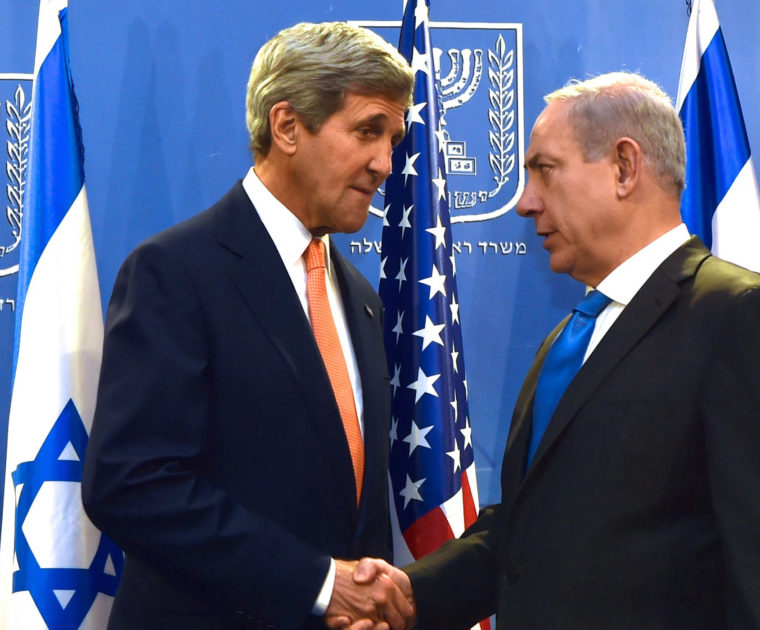
U.S. President Barack Obama will meet with Israeli Prime Minister Benjamin Netanyahu today on the sidelines of the American Israel Public Affairs Committee (AIPAC) annual conference. Netanyahu announced that the conversation would include the the P5+1 (U.S., UK, Russia, China, France, and Germany) and Iranian nuclear negotiations, which will continue this week at the technical level in Vienna.
TacNukes News No. 8

This edition of TacNukes News includes updates on political developments in Germany and The Netherlands, and on the B-61 nuclear bomb Life Extension Program in the United States.
The Challenges of Coherent U.S. Extended Nuclear Deterrence and Assurance
In this brief paper, Paul Ingram discusses U.S. commitments on extended nuclear detterence and expectations among allies. He explores the issues facing NATO and focuses on the UK-US security relationship around Trident.
Nuclear Deterrence Summit: Extended Deterrence and Assurance
On February 12, 2014, BASIC partnered with the ExchangeMonitor to hold a panel discussion on “Extended Deterrence and Assurance” at the Nuclear Deterrence Summit in Arlington, Virginia, near the Pentagon.
Verification and Trust: Vienna talks on Iran
On February 18th negotiations on a “comprehensive solution” concerning Iran’s nuclear program will begin in Vienna, Austria. In an interim agreement, or the “Joint Plan of Action”, the five permanent members of the UN Security Council and Germany convinced Iran to cease its production of 20 percent highly enriched uranium.
Russian-U.S. nuclear arms control malaise
This week, while all eyes are on the Olympic games in Russia, there may be brewing a quandary for the Obama Administration over how to address an alleged breach of the 1987 Intermediate-Range Nuclear Forces (INF) Treaty between the two countries. Although the Administration has not formally confirmed its view on whether a violation occurred, several U.S. Congressmen are putting pressure on the Administration to take action (GSN/Feb. 7) against Russia.