
December 2009: International Commission on Nuclear Non-proliferation and Disarmament (ICNND) publishes final report: Eliminating Nuclear Weapons: A Practical Agenda for Global Policymakers, Gareth Evans and Yoriko Kawaguchi, Co-Chairs, International Commission on Nuclear Non-Proliferation and Disarmament.
Search Results for: news
Getting to Zero Timeline: 2010
December 22, 2010: U.S. Senate approves New Strategic Arms Reduction Treaty (New START).
May 28, 2010: Nuclear Non-Proliferation Treaty (NPT) Review Conference 2010 adopts consensus Final Document (PDF), available online via Reaching Critical Will
Getting to Zero timeline: 2011
September 20, 2011: Guinea ratifies the CTBT
July 28-29, 2011: First high-level meeting between the US and North Korea in two years takes place between U.S. Special Representative for North Korea Policy Stephen Bosworth and North Korean First Vice Foreign Minister Kim Gye Gwan in New York. US displayed willingness to restart talks if North Korea demonstrates commitment to a constructive attitude during negotiations.
Getting to Zero Timeline: 2013
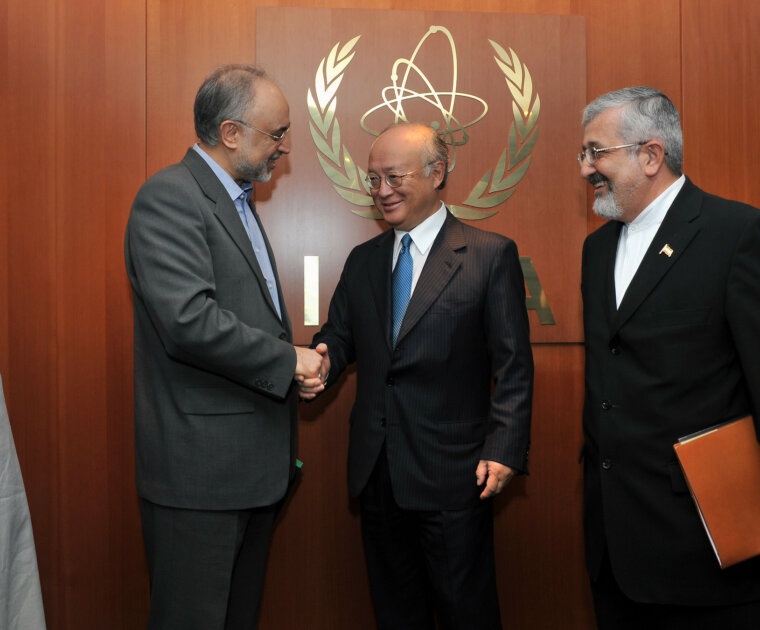
January 16-17, 2013: IAEA Talks with Iran. Tehran, Iran
January 21 – March 28, 2013: First session of the Conference on Disarmament in 2013
February 12, 2013: Obama State of the Union Address, Vice President Joe Biden stated the speech will address “advancing a comprehensive nuclear agenda to strengthen the nonproliferation regime, reduce global stockpiles and secure nuclear materials.”
February 13, 2013: IAEA Talks with Iran. Tehran, Iran.
Considering future US-Russian arms control & global dynamics
This week Moscow hosts an international security conference that will focus on the future of missile defense, more specifically, the need for effective US reassurances that it will never undermine Russia’s nuclear deterrent, and the possibility of cooperation on the issue.
Iran at the 2013 NPT PrepCom: a short guide on statements and reports
On April 22nd, delegates from NPT member states gathered in Geneva at the 2nd Preparatory Committee (PrepCom) meeting for the 2015 Nuclear Non-proliferation Review Conference. This PrepCom, spanning two weeks, was set to focus on a variety of nuclear issues, but ongoing international concern over Iran’s nuclear program meant many member states singled out Iran in their statements and reports, specifically narrowing in on issues such as non-compliance with NPT safeguards and the country’s opaque nuclear ambitions.
Split: A Tale of Two Alliances
NATO & the Arab League
NATO is currently hosting its annual conference on WMD Arms Control, Disarmament and Non-proliferation in Split, Croatia. Participants have been considering how best to tighten the verification mechanisms and strengthen commitments states make in demonstrating they will not deploy WMD. The meeting is considering issues such as WMD terrorism, regional proliferation threats (particularly in the Middle East) and NATO’s contributions to non-proliferation and disarmament.
Iran earthquake: a catalyst for confidence building at Bushehr?
On April 16th, a 7.8 magnitude earthquake hit southeast Iran causing tremors that could be felt in Bahrain, Kuwait, Qatar, the UAE, and western Saudi Arabia. This is only a week after a worrying 6.3 magnitude earthquake struck Kaki, a southern Iranian town located just 60 miles from Iran’s Bushehr nuclear power station.