Search Results for: news

The Future of Nuclear Weapons

On 11th June, Warwick University's Politics and International Studies department (PAIS) hosted a meeting in collaboration with BASIC entitled 'The Future of Nuclear Weapons: Between Disarmament and Proliferation'. The event, which brought together experts from diverse backgrounds and with significant experience on these issues, consisted of two roundtable discussions on the future of Trident and British nuclear weapons policy and prospects for non-proliferation and disarmament in the Middle East.

Friends, foes, & the unstable future: the impact of nukes on security relations in South Asia

The volatile security environment of South Asia has traditionally been dominated by on-going tensions and conflicts between Pakistan and India, who have held a tense and inimical relationship since their emergence as separate nations in 1947. The threat perception arising out of the historical tension and enduring rivalry between both countries has put them in a security dilemma in which the risk of nuclear conflict simply cannot be ruled out.

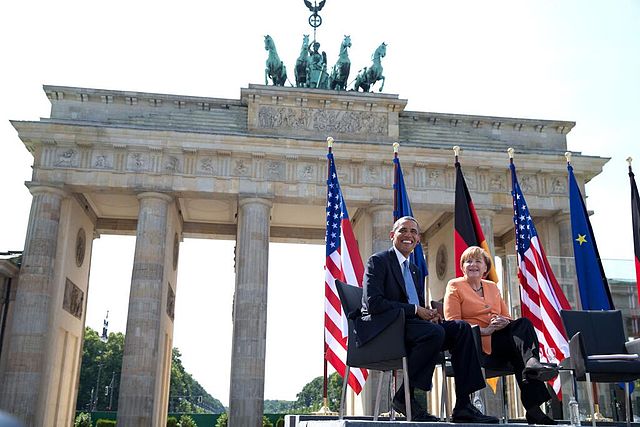
Brandenburg Gate

What comes next for U.S. nuclear weapons policy?

This Wednesday, President Obama is slated to give his next big foreign policy speech at the historically significant Brandenburg Gate in Berlin. It was at this Gate – an enduring symbol of both the division and subsequent unity of East and West Berlin – that Ronald Reagan urged then-General Secretary of the Soviet Union, Mikhail Gorbachev, to “tear down this wall” in 1987, and President Clinton spoke of a free and unified Berlin in 1994, following the end of the Cold War.

Iran’s presidential election: new possibilities for nuclear negotiations?

There is a certain fatalism surrounding Iran’s presidential election this Friday, June 14th, with many people having lost interest because of the limited field of candidates (eight) being allowed to stand. This is coupled with soaring unemployment and inflation in the Islamic Republic, caused by mismanagement and encroaching economic sanctions from the Western countries over its nuclear program. Many of the country’s young people, who constitute a very large proportion of the electorate, are disheartened by the diplomatic damage to Iran’s international reputation, and the economic hardship that is impacting on their everyday lives.

IAEA Board of Governors meeting and Iran

The International Atomic Energy Agency (IAEA) Board of Governors will meet this week, starting today in Vienna, and Iran’s nuclear program will be on the agenda. The May 22ndIAEA report concluded that little has changed since previous assessments of the nuclear program – with Iran continuing to enrich nuclear fuel and Tehran and the Agency at loggerheads over what is necessary to show that all of Iran’s nuclear activities are for peaceful purposes.