The Ministry of Defence budget has avoided drastic cuts, keeping plans to increase equipment spending by 1% annually after 2015. As the government prepares to publish the Trident Alternatives Review (TAR), political debates intensify over the renewal of the UK’s nuclear weapons system. The Liberal Democrats seek more affordable, flexible alternatives, while Conservatives support a like-for-like renewal. The upcoming General Election and international commitments further complicate the issue.
Programmes
Open-Ended Working Group Furthers the Disarmament Agenda in Geneva
On Thursday and Friday, the UN Open-Ended Working Group (OEWG) on nuclear disarmament meets for the third time in Geneva. The OEWG was established in December 2012, under UNGA Resolution A/RES/67/56, to develop proposals for innovative and measured steps to take forward multilateral nuclear disarmament for the achievement and maintenance of a world free of nuclear weapons.
Implications of President Obama’s Speech in Berlin and Nuclear Strategy Review
—Progress on nuclear reductions will require more successful engagement with Russia President Barack Obama set…
Implications of President Obama’s Speech in Berlin and Nuclear Strategy Review
—Progress on nuclear reductions will require more successful engagement with Russia
President Barack Obama set out his second term nuclear agenda on June 19, 2013 in a major speech in Berlin, and in tandem released elements of his long-awaited Nuclear Weapons Employment Strategy.
Friends, foes, & the unstable future: the impact of nukes on security relations in South Asia
The volatile security environment of South Asia has traditionally been dominated by on-going tensions and conflicts between Pakistan and India, who have held a tense and inimical relationship since their emergence as separate nations in 1947. The threat perception arising out of the historical tension and enduring rivalry between both countries has put them in a security dilemma in which the risk of nuclear conflict simply cannot be ruled out.
Threat perceptions, the future of the alliance, and thinking differently
President Obama’s foreign policy speech in Berlin yesterday, in which he set out his highly-anticipated second term nuclear agenda, calls on us to change the way we think about European security and the direction in which we want to travel.
What comes next for U.S. nuclear weapons policy?
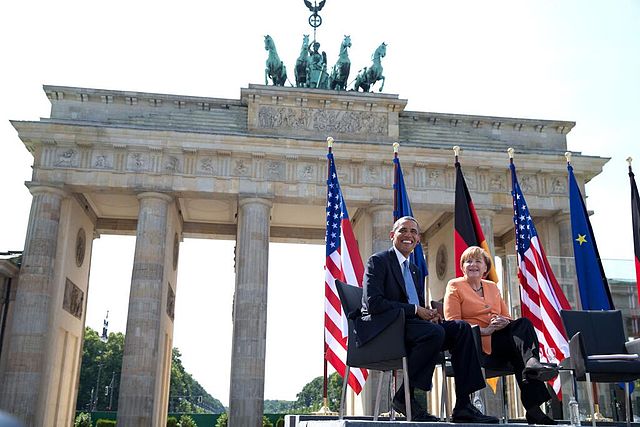
This Wednesday, President Obama is slated to give his next big foreign policy speech at the historically significant Brandenburg Gate in Berlin. It was at this Gate – an enduring symbol of both the division and subsequent unity of East and West Berlin – that Ronald Reagan urged then-General Secretary of the Soviet Union, Mikhail Gorbachev, to “tear down this wall” in 1987, and President Clinton spoke of a free and unified Berlin in 1994, following the end of the Cold War.
They’re not the P5, so stop calling it the P5 process!
“The limits of my language means the limits of my world.”– Ludwig Wittgenstein
The language we use affects the world as we interpret it. While many are all-too familiar with the “sticks and stones” of the nuclear world, less attention has been paid to the terminology around disarmament and nonproliferation.