This week, representatives of Iran and the P5+1 (China, France, Russia, the United Kingdom, and the United States; plus Germany), also known as the E3+3, will meet in Geneva on Thursday and Friday in an attempt to make progress on resolving the standoff over Iran’s nuclear program. Anticipation is now building for some clear signs that each side is agreeing to measures that will convince the other side of intentions to follow through on a long-term game plan.
Analysis
Repairing and refocusing a fractured nuclear discussion
Saying that nuclear non-proliferation and disarmament are interlinked may seem like a spectacular statement of the obvious. Non-proliferation – that is, preventing the further spread of nuclear weapons – relies heavily on our ability to simultaneously deliver results on disarmament – that is, getting rid of the nuclear weapons that currently exist around the world.
Multilateral cooperation on non-proliferation & regional security
This week we will witness several examples of multilateral cooperation on non-proliferation and regional security. Beginning today, it was reported that representatives from Middle East states are convening in Switzerland at a meeting organized by Finnish Ambassador Jaakko Laajava, the facilitator of the official conference to establish a zone free of nuclear and WMD in the Middle East.
Why diversity matters to the nuclear debate
The public discourse around nuclear weapons policy can be deceptively binary: countries should retain nuclear capabilities or they shouldn’t; nuclear weapons provide security and strategic stability or they don’t. However, it is generally only the tip of the iceberg that makes its way into mainstream debate. In reality, a web of incredibly technical, expert discussion takes place below the surface which defines how substantive nuclear policy decisions are taken.
Geneva talks: a fresh opportunity for Iran & E3+3 (P5+1)
The latest installment of the negotiations between Iran and the E3+3 (P5+1: United States, United Kingdom, China, Russia, France, and Germany) will resume on Tuesday and Wednesday in Geneva. Negotiations with Iran on its nuclear program are now into their 10th year, and each year brings about more disappointment and more anxiety over concerns of nuclear proliferation.
The importance of seeing and grasping opportunities
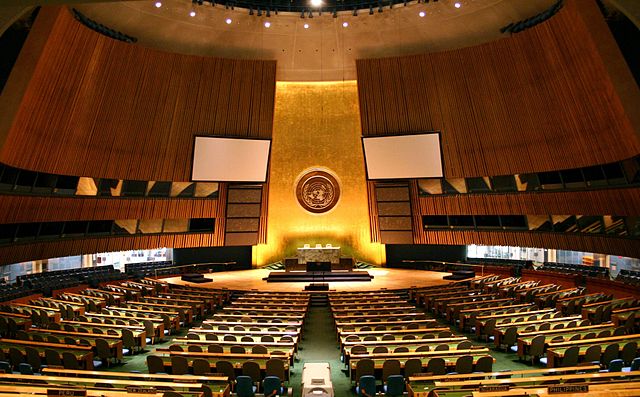
The annual month-long meeting of the General Assembly’s First Committee, responsible for issues of international peace and security, begins today in New York. Two issues have been on the media’s agenda: disarming Syria of its chemical weapons and the next round of nuclear talks between Iran and the E3+3. Both involve a degree of optimism, perhaps even an excitement around the possibilities, rarely seen in the U.N. corridors in recent years. Perhaps it is because these openings for progress have been so unexpected.
The importance of seeing and grasping the opportunities
The annual month-long meeting of the General Assembly’s First Committee, responsible for issues of international peace and security, begins today in New York. Two issues have been on the media’s agenda: disarming Syria of its chemical weapons and the next round of nuclear talks between Iran and the E3+3. Both involve a degree of optimism, perhaps even an excitement around the possibilities, rarely seen in the U.N. corridors in recent years. Perhaps it is because these openings for progress have been so unexpected.
Working towards a WMD-free Middle East
Despite notes of caution and a lack of concrete offers, Presidents Obama and Rouhani set the stage for increased engagement at the UN last week. With calls for a WMD-free zone in the Middle East reaffirmed, Israel’s game plan will be central.