Selection of international reactions, including official statements and remarks, to the recent Iran nuclear agreement.
Analysis
Scottish referendum: update & implications on Trident
This morning, the Scottish government published the long-awaited White Paper on Scottish Independence as promised. Scotland’s Future – Your Guide, it is hoped, will act as a comprehensive manual for an independent Scotland. But apart from formally setting out the manifesto points which have already been widely discussed, there are no new surprises concerning the future of Trident concealed within its 670 pages.
TacNukes News, No. 7
This latest edition on tactical nuclear weapons in Europe includes news and recent articles related to the B-61 Life Extension Program in the United States and an update on developments in the Netherlands.
Britain in the world: Beyond Europe versus America
It is increasingly likely that the British people will be given a say on membership of the European Union by the end of the next Parliament. Although it remains to be seen whether this will take the form of an “in-out” referendum or a more limited “renegotiation” of the relationship between London and Brussels, the scene is set for a meaningful debate over Britain’s place in Europe and its role in the wider world.
Making progress with Iran
After three decades of broken or faltering diplomatic ties between Iran and the West, and a decade of tension over the Iranian nuclear programme, the E3+3 (UK, France, Germany, US, Russia and China – also referred to as the P5+1) and Iran finally made a historic step forward over the weekend.
TNW, The Quiet Menace: How the Threats to Europe, the Middle East and South Asia are Linked
London’s International Institute for Strategic Studies (IISS; what – you haven’t applied for membership yet?) recently published their annual review of world affairs, Strategic Survey 2013. In its chapter on strategic policy issues, the Survey covers an important topic, the complex nuclear arms race underway in South Asia among India, Pakistan and China.
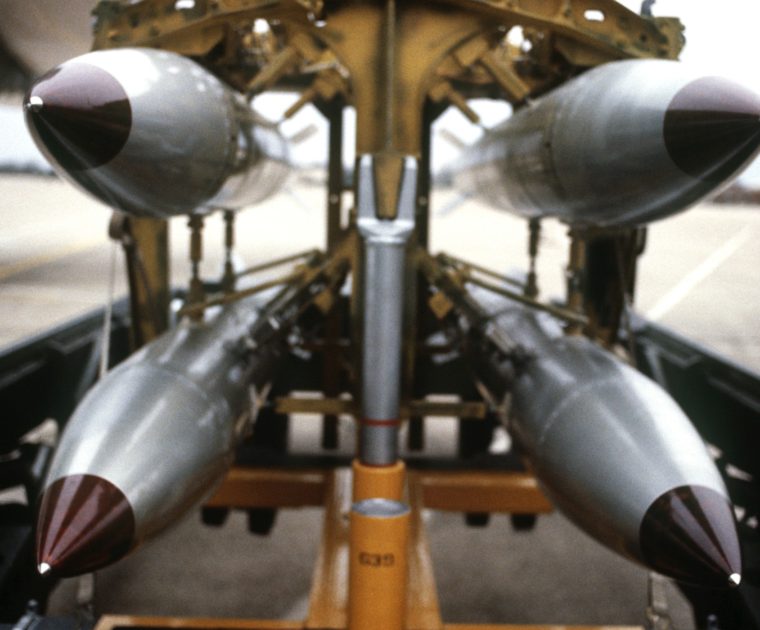
Reducing the Role of Tactical Nuclear Weapons in Europe: Joint Project
BASIC and the German Institute for International and Security Affairs (SWP) run a joint project on reducing the role of tactical nuclear weapons in Europe, supported by the William and Flora Hewlett Foundation.
Talking about the Bomb in Tel Aviv
Elzbieta Okuniewska published “Talking about the Bomb in Tel Aviv” for the Palestine-Israel Journal which covers the roundtable discussion that BASIC jointly organised with the Green Cross, the Israeli Disarmament Movement, and IKV Pax Christi. Paul Ingram shared his experience working with Iran on nuclear issues while BASIC senior fellow Ward Wilson presented narratives around rethinking nuclear weapons.