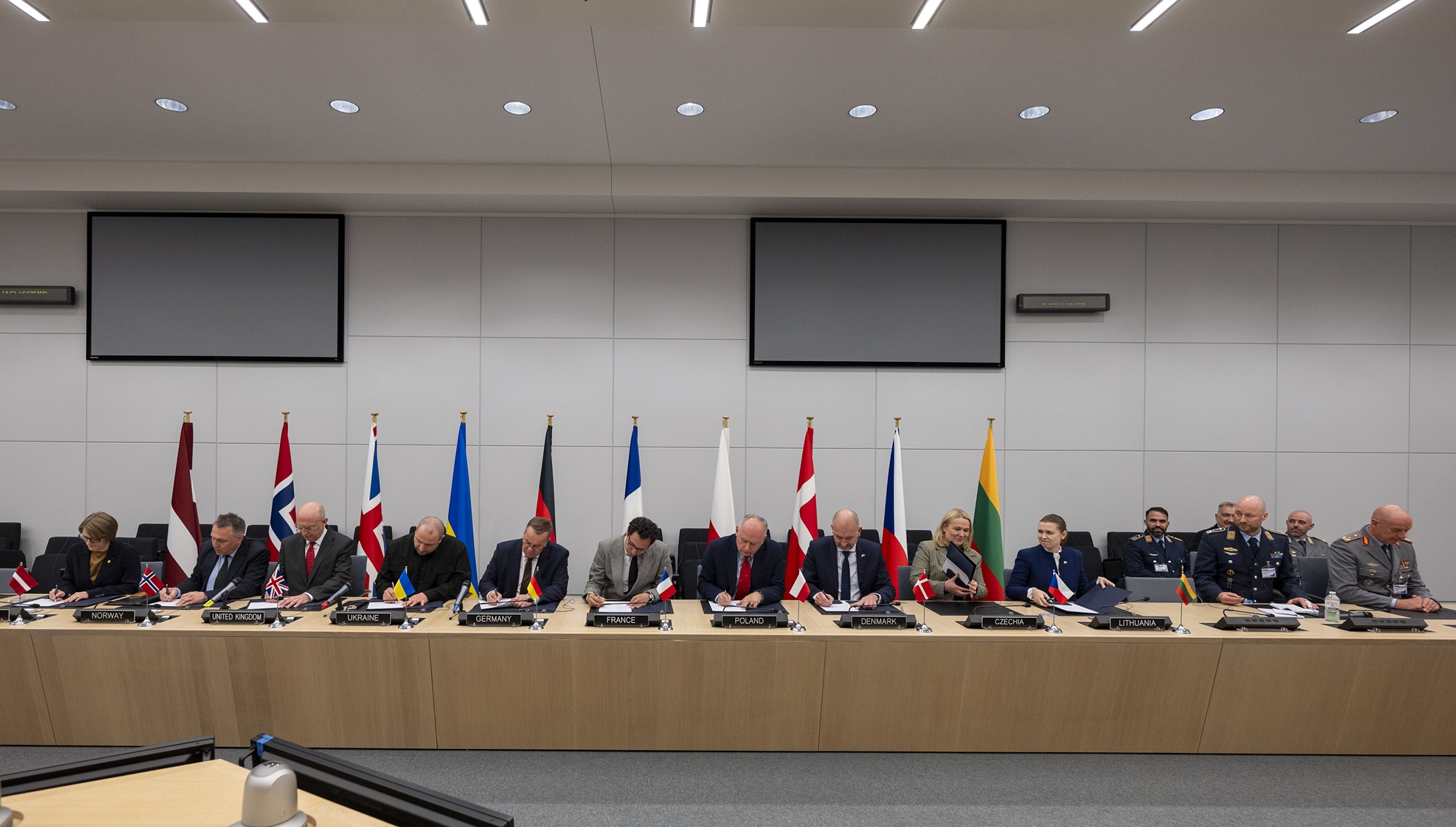
The liberal international order is in crisis. At the same time, we are witnessing an historic moment, or Zeitenwende, of transformation of the global rules-based order. These kinds of systemic transformations have happened before, and are often ominously associated with war. We are arguably moving into multiorder, and European governments must be prepared to be order-setters, rather than order-takers to define what constitutes common European security.
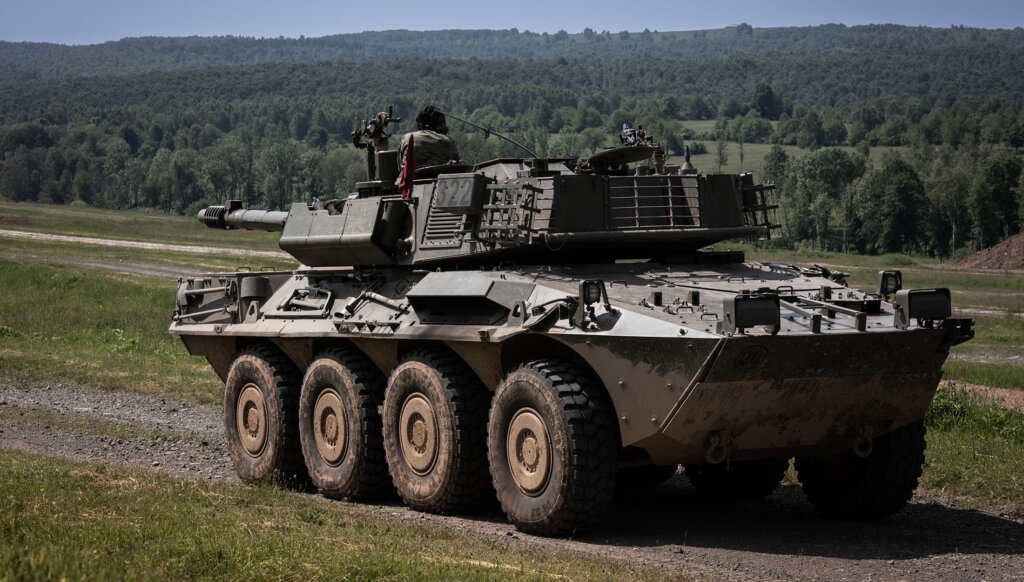
Since the end of the Cold War we have seen a gradual erosion of the post-Cold War order, which was intended to bind European powers (and this included the US as an European power) into multilateral institutions, various cooperation schemes and arms control agreements, suggesting its design was flawed from the beginning. In this period we have witnessed a Ruxit and we are now witnessing a still unfolding US exit from Europe, leaving the field open for Europe to devise a security architecture that has common European security as its centrepiece.
Ideal type of order
This is a historic opportunity. The US may for the first time since the 1960s be willing to relinquish its prime position as the leader of Europe’s security with all the privileges it entailed. It is clear that the second Trump administration and its “America First” agenda has left no doubt among many European governments that Europe must have a far greater role in the defence of the continent, but more importantly, that Europe must have a far greater order setting role for the order on the continent.
The ideal type of order can be seen as “cluster of states, converging around a leading state, whose identity and values … will influence the patterns of power, principles and practices within the order”, and with the previous leader of liberal international order retreating into an unreliable practice of transactional foreign and security policy and domestic autocracy, the European order and its ordering principles are seeking a new maker from which the security architecture will follow. Rather than being imposed an order, Europe needs the internal resolve to be the order setter. It is thus not a matter of meeting a 5% contribution to NATO, but a matter of Europe devising European security within a European order. While the 5% contribution matters in material terms, the ordering principles are not being transferred to a common European purpose by simply investing more in the defence of the treaty area.
By having the responsibility of European security in the hands of Europe, it is in a position to devise a security architecture that heralds the common security of those countries that are considered European. It is likewise clear that if Europe remains in a situation where the order is dictated by outside powers, the order remains devised to service their interests and not necessarily European interests. That is not to say that these interests are not also Europe’s or at least somewhat aligned, but it is not something Europe can rely on will be the case even after the Trump administration’s departure.
“We are now witnessing a still unfolding US exit from Europe, leaving the field open for Europe to devise a security architecture that has common European security as its centrepiece.”
Despite the seemingly transatlantic unity displayed at the most recent NATO Summit in The Hague, there is clear evidence that security interests between the US and a range of European NATO allies are drastically diverging, and nowhere is it more apparent than in the case of the most pressing security issue in Europe: Russia’s war against Ukraine. As said by many European state leaders, Ukraine is fighting for Europe, and by that token alone, Ukraine should be a NATO member once the war is over. This is something that European leaders support. NATO Secretary General Mark Rutte recently said that Ukraine’s path towards NATO membership is irreversible, yet, President Trump has said he does not support Ukrainian membership of NATO.
Outstanding question
Ukraine’s membership of NATO is one example of how Europe’s security interests are not aligned with that of the US. While there are a lot of initiatives to increase Europe’s role in its security, such as via a European pillar in NATO, or a coalition of the willing, an outstanding question remains: who is responsible for European security?
It is a sobering lesson to recall the double crisis in 1961-1962: the Berlin Crisis and the Cuban Missile Crisis. These are quite often discussed, however, what is more rarely discussed – or rather what is often overlooked – is that both crises were a significant wakeup call in Europe. Both East and West.
With the double crisis, it was driven home in the various European capitals that decisions on war and peace lay in the hands of Washington and Moscow – despite the fact that the likely theatre of a war, including a nuclear war – was Europe. This led to an often uncoordinated European effort to move the US and Soviet Union towards a détente, and an insistence on having a say in the ordering principles of Europe and the security in Europe. This is why we have the OSCE, this is why we have the Nuclear Planning Group in NATO, and this is why we got the Harmel formula.
Europe alone is not the reason why we entered a period of détente. However, Europe had agency and ability to play a key role in moving the superpowers to a détente posture and the ability to question nuclear unilateralism – at least in NATO, and Europe created one of the very few institutions that are still here today namely the OSCE. In other words, Europe took leadership of the European order and its ordering principles.
Unlike now, Europe was arguably a defined area split in East and West. Today however, Europe is a different matter. Ruxit, Brexit and enlargement and other membership action plans underscores how Europe is a difficult issue beyond cartography. In addition, historically, states have opted in and out of Europe, and it is clear that among the European allies in NATO there is still no common conception of what security entails. At the same time some European states are undergoing considerable political change too.
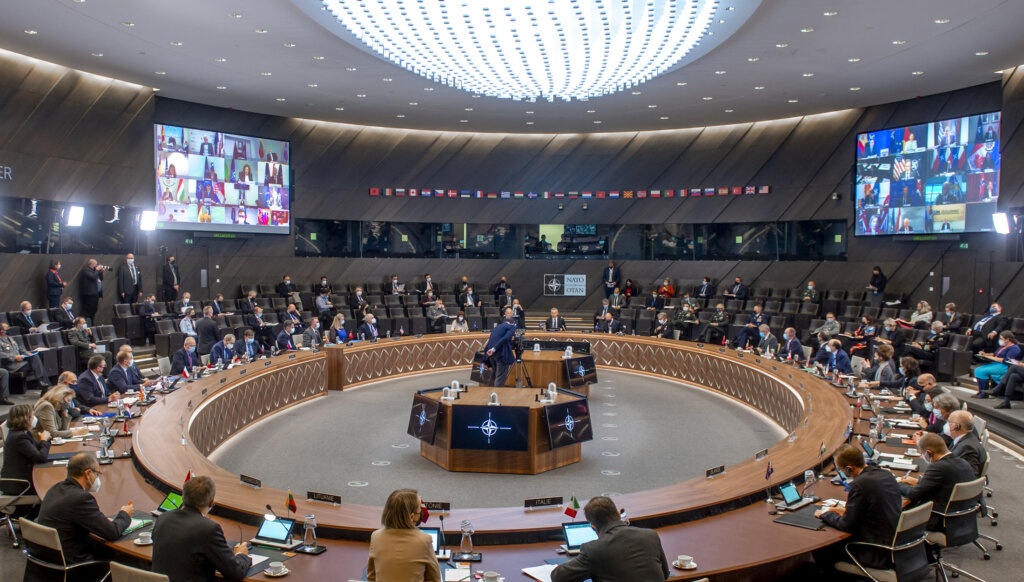
The increase of undemocratic values in Europe is noticeable beyond Orban’s Hungary, yet, a case can be made for proximity. “America First” has everything to do with the homeland, and the North Atlantic Ocean is a convenient distance that enables the Trump administration’s agenda. That being said, a distinctive feature of the European security architecture is that the principles and rules of the UN Charter are reinforced throughout a number of core institutions and agreements founded since 1945, such as the Council of Europe 1949 and the 1990 Charter of Paris. This lends credence to the idea that what constitutes Europe is a shared set of ordering principles coupled with proximity.
There are in other words plenty of lessons from the past that should be sobering in European capitals. There is a recent history of ability to enforce common principles for a European order and from which European leadership of common security flowed. This is a valuable lesson as Europe, both those inside and outside the common institutions, are facing new threats and a new reality (of insecurity) following the ongoing transformation of the global rules based order. The key questions remain though: what constitutes common European security? And who will devise the order?