
On March 25th BASIC hosted a conference in collaboration with Cairo University and the Egyptian Council for Foreign Affairs, in order to stimulate discussion about Egypt’s role and strategy in the regional and global non-proliferation regime over the next crucial period leading up to the 2015 NPT Review Conference and beyond, in the interests of effective impact on the disarmament debate.
Content Type
Russian Reactors Risk Ukraine Spillover Into Iran Nuclear Talks
BASIC's executive director, Paul Ingram, is quoted in this article by Jonathan Tirone, Ladane Nasseri and Indira A.R. Lakshmanan on 20 March 2014 about Russia's influence on the P5+1 negotiations with Iran in April. Ingram states: “The split could be exacerbated if Iran signs a deal for new reactors during negotiations…A plan that would require enrichment capacity is part of Iran’s narrative. The Russians could be looking to develop and use leverage to build a relationship beyond nuclear into a bigger strategic relationship.”
Resisting our Cold War instincts
When Ukraine became a newly independent state after the dissolution of the Soviet Union in 1991, its future security was far from assured. Yet in 1994, an era in which nuclear deterrence remained a central security strategy for others, Ukraine opted for nuclear disarmament – despite its own vulnerability and without securing a place under any nuclear umbrella. In return, it sought alternative guarantees for its borders.
The Nuclear Factor in the Crimean Security Crisis
The current security crisis in Crimea has, up to this point in time, mostly involved conventional army and navy forces of the Russian Federation and Ukraine. Nuclear weapons, however, have the potential to rear their ugly head. Both the United Kingdom and the United States have particular responsibilities too, as signatories to the 1994 agreement on security assurances for Ukraine,
BASIC Project Launch: Next Generation
Help us to inspire a new generation of thinking on nuclear non-proliferation and disarmament.
Seeking Assurance
All eyes are on Russia’s next moves in Ukraine, and Crimea in particular, with news outlets reporting a strengthened Russian military presence on the peninsula. A referendum proposed by members of the Crimean parliament is set to take place in Crimea this Sunday, 16th March, to choose its future as part of either Ukraine or the Russian Federation, a move that could irreversibly deepen the crisis.
Autonomous & nuclear weapons systems: the humanitarian dimensions
We are witnessing shifts in the global security debate as nations are beginning to emphasize human security in the face of far reaching advancements in military technology. The recent development of autonomous weapons systems or lethal autonomous robots (LAR) that are being manufactured without a “human in the loop” have triggered serious ethical concerns and as a result, civil society and NGOs began talks in Geneva last year on the humanitarian implications.
Will diplomacy prevail?
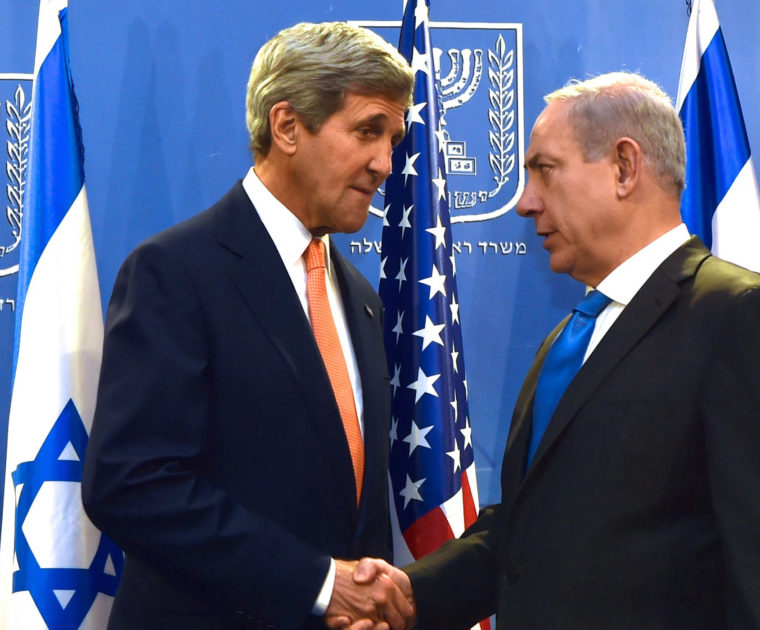
U.S. President Barack Obama will meet with Israeli Prime Minister Benjamin Netanyahu today on the sidelines of the American Israel Public Affairs Committee (AIPAC) annual conference. Netanyahu announced that the conversation would include the the P5+1 (U.S., UK, Russia, China, France, and Germany) and Iranian nuclear negotiations, which will continue this week at the technical level in Vienna.