
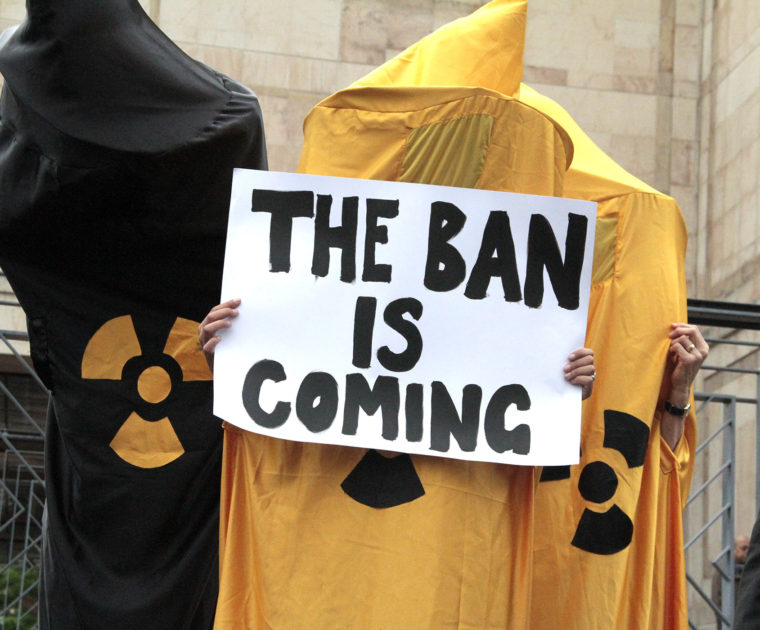
The official draft text of a treaty to ban nuclear weapons is likely to be published in the next two weeks (15-26 May 2017).
Analysis

30 Ways The UK Must Lead In Multilateral Disarmament
Executive Director of BASIC, Paul Ingram, recently authored a piece in the Huffington Post during the launch of BASIC’s new report with UNA-UK, Meaningful Multilateralism: 30 Nuclear Disarmament Proposals for the Next UK Government.

Zero Days, Millions in damage: A scientist’s review of the RAND report Zero Days, thousands of nights.
A recent RAND report, released just two days after Wikileaks opened its Vault 7 that detailed the CIA’s entire stockpile of vulnerabilities and their suite of cyber tools (also referred as exploits), seeks to establish a protocol and the advantages of state intelligence agencies maintaining classified vulnerability stockpiles.
UK revokes ICJ jurisdiction over its nuclear weapons
The UK Government has inhibited the International Court of Justice (ICJ) from ruling on cases about nuclear weapons or nuclear disarmament, including if it uses Trident against another country.
Mainstreamed or Sidelined? Non-NPT States and the Nuclear Order
Our Project Leader, Sebastian Brixey-Williams, asked a Carnegie panel of nuclear practitioners from India, Israel, and Pakistan whether they saw their states as responsible nuclear states, and what criteria they use to make such an assertion.
Nuclear non-proliferation: Planning for 2020
Each December, Wilton Park, the UK Foreign Office conference centre, hosts an international conference on nuclear disarmament and non-proliferation. In 2016, BASIC Director Paul Ingram authored the official report.
China’s UUV seizure was about undersea dominance
As the USNS Bowditch was recovering a UUV (unmanned underwater vehicle, or underwater drone) in the South China Sea on 15th December, a light-fingered Chinese Navy salvage ship reportedly called Naniju swooped in and took it in spite of repeated bridge-to-bridge demands to return the craft.

Opportunities for effective strategic dialogue: bridging the nuclear deterrence and disarmament constituencies
In times when evidence-based policy making approaches are under assault, communities that devote themselves to managing the dangers of strategic competition and nuclear arms racing need to come together to consider ways to realise their common objectives.