
How will we achieve progress on the long and tortuous road of eliminating WMD from the whole of the Middle East and formalizing that in verified treaties? We clearly need to address the underlying obstacles that hinder further progress on the establishment of the WMD-free zone in the Middle East, and this was the subject of a side event at the 2014 NPT PrepCom on May 7th, co-hosted by BASIC with PAX and the Israeli Disarmament Movement.
Search Results for: news
Heeding the outcomes & remaining challenges of the 2014 Nuclear Security Summit
On March 24-25, 53 world leaders convened at The Hague for the third Nuclear Security Summit to discuss the implementation of national measures to protect vulnerable fissile and radiological material from belligerence-prone hands. The following commentary focuses on the summit’s outcomes and remaining challenges as a platform to build on for continued progress.
Iran nuclear talks and the shadow of the Ukraine crisis
On Tuesday and Wednesday of this week, representatives from Iran and the P5+1: China, France, Russia, the United Kingdom, the United States, plus Germany, will meet in Vienna to continue working toward a comprehensive agreement around Iran’s nuclear program. The last such meeting was held in mid-March – not long after the Russian invasion of Crimea, and some worried that the crisis would set back the talks.
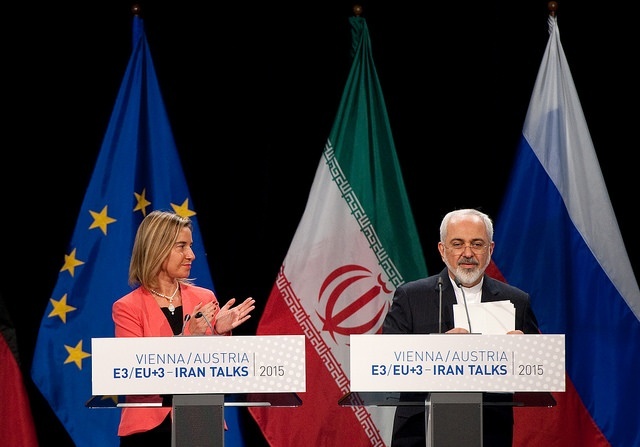
Personal political interests and the Iranian nuclear negotiations
Iran and the E3+3 will be returning to the negotiating table on April 8th to begin yet another round of high level talks on the status and future of the Iranian nuclear program. As ever, there are various causes for caution, and perhaps even concern, as the Iranians and their American and European counterparts continue to disagree on central issues such as the fate of the Arak heavy water reactor and permitted levels of nuclear enrichment.
Nuclear Security and the Nuclear Security Summits
Resources from BASIC about Nuclear Security.
Next Generation
BASIC’s NextGen project aims to inspire the next generation to think differently about nuclear weapons by injecting fresh thinking into the nuclear weapons discussion.
Nuclear security: continued breakthrough or stalled progress?
On October 11, 2001, a month following the catastrophic events of 9/11, a CIA report concluded that Al-Qaeda infiltrates planned to detonate a 10-kiloton nuclear bomb at the heart of New York City. Though later deemed as a false alarm, the motivation to conduct a nuclear attack by non-state actors, combined with the widespread availability of fissile material often stored under subpar conditions,
Russian Reactors Risk Ukraine Spillover Into Iran Nuclear Talks
BASIC's executive director, Paul Ingram, is quoted in this article by Jonathan Tirone, Ladane Nasseri and Indira A.R. Lakshmanan on 20 March 2014 about Russia's influence on the P5+1 negotiations with Iran in April. Ingram states: “The split could be exacerbated if Iran signs a deal for new reactors during negotiations…A plan that would require enrichment capacity is part of Iran’s narrative. The Russians could be looking to develop and use leverage to build a relationship beyond nuclear into a bigger strategic relationship.”