
Eleven months before the 2015 NPT Review Conference is convened, there is still no sign that the Helsinki conference on the establishment of the WMD-free zone in the Middle East will be held. In what seemed to be a glimmer of hope in Geneva on May 14-15, the conference’s facilitator, co-conveners and future state parties to the zone met to discuss the conference’s modalities.
Blog
A Middle East free of Nuclear Weapons and other Weapons of Mass Destruction
The idea of establishing a Nuclear Weapon Free Zone in the Middle East was spearheaded by Iran in 1974, followed by Egyptian endorsement. In 1990, under President Hosni Mubarak’s leadership, Egypt broadened the concept of the zone to include other weapons of mass destruction and lobbied incessantly to bring discussions of the zone to the upper echelons of international relations, the Non-Proliferation Treaty (NPT) and the United Nations.
Heeding the outcomes & remaining challenges of the 2014 Nuclear Security Summit
On March 24-25, 53 world leaders convened at The Hague for the third Nuclear Security Summit to discuss the implementation of national measures to protect vulnerable fissile and radiological material from belligerence-prone hands. The following commentary focuses on the summit’s outcomes and remaining challenges as a platform to build on for continued progress.
Iran nuclear talks and the shadow of the Ukraine crisis
On Tuesday and Wednesday of this week, representatives from Iran and the P5+1: China, France, Russia, the United Kingdom, the United States, plus Germany, will meet in Vienna to continue working toward a comprehensive agreement around Iran’s nuclear program. The last such meeting was held in mid-March – not long after the Russian invasion of Crimea, and some worried that the crisis would set back the talks.
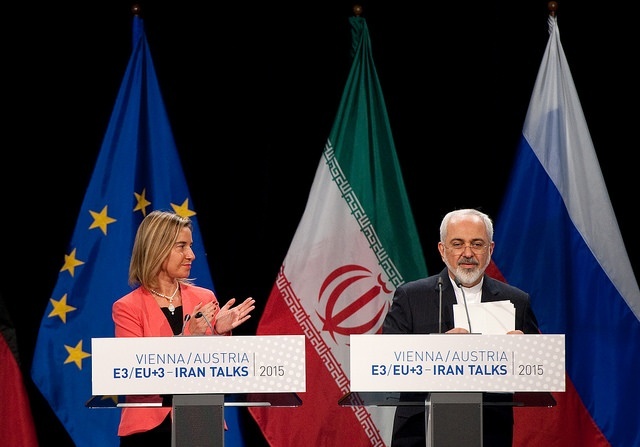
Personal political interests and the Iranian nuclear negotiations
Iran and the E3+3 will be returning to the negotiating table on April 8th to begin yet another round of high level talks on the status and future of the Iranian nuclear program. As ever, there are various causes for caution, and perhaps even concern, as the Iranians and their American and European counterparts continue to disagree on central issues such as the fate of the Arak heavy water reactor and permitted levels of nuclear enrichment.
The Nuclear Factor in the Crimean Security Crisis
The current security crisis in Crimea has, up to this point in time, mostly involved conventional army and navy forces of the Russian Federation and Ukraine. Nuclear weapons, however, have the potential to rear their ugly head. Both the United Kingdom and the United States have particular responsibilities too, as signatories to the 1994 agreement on security assurances for Ukraine,
Autonomous & nuclear weapons systems: the humanitarian dimensions
We are witnessing shifts in the global security debate as nations are beginning to emphasize human security in the face of far reaching advancements in military technology. The recent development of autonomous weapons systems or lethal autonomous robots (LAR) that are being manufactured without a “human in the loop” have triggered serious ethical concerns and as a result, civil society and NGOs began talks in Geneva last year on the humanitarian implications.
US-UK Mutual Defence Agreement Renewal 2014: a foregone conclusion?
1958 saw the first protest march to Britain’s nuclear bomb factory at Aldermaston, the start of the deployment of US THOR ballistic missiles with thermonuclear warheads at RAF Feltwell, a series of British thermonuclear tests at Christmas Island and the US and the UK signing the Agreement For Cooperation on the Uses of Atomic Energy for Mutual Defence Purposes – also known as the Mutual Defence Agreement (MDA).