In the latest of a series of articles assessing recent hostilities between India and Pakistan, Ruhee Neog, BASIC Non-Resident Fellow and Director of the India-based Institute of Peace and Conflict Studies (IPCS) says that control of the information narrative has become of paramount importance. The views expressed belong solely to the author of the article and do not necessarily reflect their government’s position, any affiliated institutions, or that of BASIC.
In trying to make sense of the 2025 India-Pakistan crisis as it unfolded, a former Indian Director General of Military Operations (DGMO) told me: “Only about 30% of a war is actually fought on the battlefield. The rest is all optics”. He was pointing to the role of information warfare in securing strategic advantage over an adversary beyond battlefield engagement. If an actor is able to control information flows — traditionally a government’s prerogative during crises — it has an upper-hand in shaping the narrative in its favour. This time in the India-Pakistan case, I found that established pathways of information control were disrupted more aggressively than in past crises. So even though the crisis lasted four days, it felt disproportionally intense.
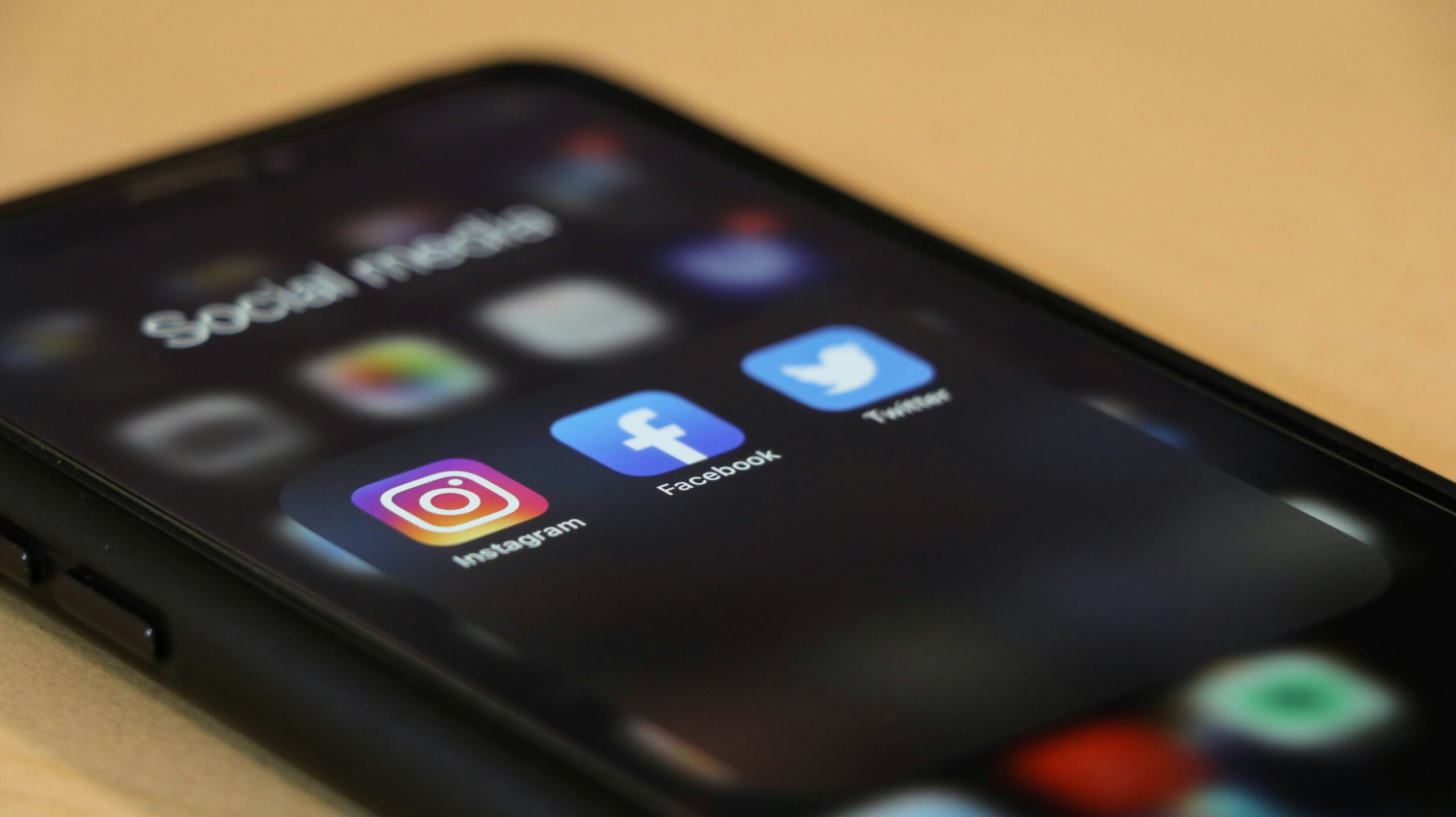
While rapid, retaliatory military escalation also contributed to the sense of intensity, technology-enabled communications — especially on social media — complicated our perceptions of reality more than in past crises, such as Pulwama-Balakot in 2019. In fact, as the conflict played out, a question I asked myself frequently was: “‘How do I know what is real?” Many of my contemporaries working on security and foreign policy in India, whose opinions I respect, were uncharacteristically quiet. There weren’t many hot takes. I personally found it challenging to evaluate the integrity of my information and was concerned about unwittingly amplifying fake news. Others keen on independently analysing developments in real-time likely found themselves in a similar predicament. I only relied on official Indian press briefings while keeping a close eye on what was coming out of the Pakistani establishment.
“With technology revolutionising the information age, we have a great deal more access to sources of information − whether real or fake − during crises.”
During crises, the news-consuming public can be overwhelmed − as I was − with a proliferation of conflicting information from a variety of sources. Despite such saturation, credible information is still scarce. A friend who lives in Jammu, in the Union Territory of Jammu and Kashmir, texted me in a panic during a citywide power blackout. Pakistan had sent a volley of munitions into the vicinity of the International Boundary. Local WhatsApp groups were flooded with pandemic-era hysteria, featuring hoarding advisories to address alleged supply shortages. In reality, neither food nor fuel were running short. With misinformation and disinformation targeting specific audiences — such as locals living in border towns — it is increasingly difficult to distinguish the authentic from the unreliable, generating battlefield-like volatility among the public.
If the media tools that filter our perceptions of reality – through agenda setting, priming, and framing — have not changed, what explains this shift in crisis information? Technological evolution has diversified media actors and transformed information delivery mechanisms, altering how these tools are deployed. Previously, they were used exclusively by the traditional media to attach value to issues or frame them in ways that incentivised public support for a particular course of action. Now, the same tools are accessible to many more media actors. The information environment during a quickly developing situation is much more chaotic as a result. Clashing narratives emerge from within this this chaos, and the most compelling among them can shape how a crisis is perceived. This can complicate a government’s ability to exercise narrative dominance, which they once managed through a symbiotic relationship with the media during crises. An erosion of information control can confuse a state’s crisis signalling – whether to domestic audiences, international stakeholders or adversaries — with potential knock-on implications for crisis management.
For a chapter in a 2018 edited volume on India-Pakistan crises, I derived from the broader literature three models of media engagement with government and public opinion. I used these specifically to decode Indian media behaviour during crises. The common link across these three models is that every government has a legitimate interest in shaping and managing the information environment during a crisis to prevent any blowback on its agenda. As the only ”‘official” source of information in an evolving situation that it is directly party to, the state has a monopoly on shaping, manipulating, and limiting or opening up information flows. What sets one model apart from the other is the degree to which the government’s information management is hijacked by factors outside its control. This is true of hybrid warfare in contemporary crises across the world.
Deepfakes emerged as a prominent disruptor during the 2025 India-Pakistan crisis. Videos in circulation purportedly showed Indian leaders from Prime Minister Narendra Modi to External Affairs Minister Dr. S Jaishankar apologising to Pakistan. An audio clip meanwhile apparently depicted Pakistani Prime Minister Shehbaz Sharif conceding defeat to India. Both were proven to be fabricated. With technology revolutionising the information age, we have a great deal more access to sources of information − whether real or fake − during crises. Technology also enables relatively instant public communications while governments, often in reaction mode, are bound to be slower to respond. This can delay crisis messaging. That said, India’s fact checking and information management infrastructure appears to have learnt from the Pulwama-Balakot crisis, demonstrating greater sophistication than before. Indeed governments now routinely mount their own misinformation and disinformation campaigns. Still, official authentication of AI-enabled disruptors — which are subject to government Standard Operating Procedures and timelines — are still no match to internet virality.
An inability to keep up with internet-fuelled virality applies to traditional news media as well. In addition to being subjected to fewer editorial checks and vetting than in previous decades, we see a tendency, especially across television news media, to cite unverified “sources” procured from trending news on social media. AI-generated military footage, visuals from other conflict areas, even snippets from video games were foisted as real time images and videos from the India-Pakistan crisis. This algorithmic manipulation of human emotion shaped early public impressions of what was going on. Much of the footage was debunked, though not before being picked up and amplified by news channels that later had to proffer retractions. News-gathering by traditional media during crises, therefore, has undergone its own revolution in a spiral to the bottom.
On the subject of technology manipulating human cognition, I noticed curious things happening with language as well, with instances of what appeared to be AI-generated posts on social media platforms such as X and WhatsApp. This is a new development in India-Pakistan crises, corresponding with the introduction of AI systems into our everyday lives. In addition to being easily discernible through online detectors, language generated by AI has several “give-aways” that distinguish it from text written by real people. One of the most obvious signs is a certain conveyor belt uniformity in sentence construction. Another is a tendency to use certain distinct words and phrases. AI models such as ChatGPT and Gemini have been programmed on large, albeit particular, data sets. Naturally, this results in AI — like human beings — developing its own biases, communication styles and framing patterns. So while using these tools to refine messaging may seem innocuous, it is worth asking whether AI-designed language and tone could inadvertently lead to specific narratives being perpetuated during crises. This can have both positive and negative consequences for crisis management.
In India, demographics, a rising population, and wider internet access offer important context. From independent open source intelligence analysts offering live geospatial data, to citizen journalism, to simply a person with a smart phone, a social media platform, and an opinion − technology has transformed the information landscape. While governments are adopting smarter messaging and there is no evidence to suggest a transfer of information control during crises, technology-enabled public communications pose significant challenges to their erstwhile information monopoly. Future crisis management must be adapted to these dynamics. By clarifying what contemporary information warfare looks like — and who wages it — our understanding of how public opinion engages with information flows has important lessons for future crises.
Ruhee Neog is the Director of the Institute of Peace Conflict Studies in India. She serves as a Board Member of the International Nuclear Security Forum at Stimson Center, Fellow with Sandia National Laboratories and Non- Resident Fellow of BASIC . She has held fellowships with Harvard Kennedy’s School Belfer Center (Managing the Atom and International Security Program) and the Stimson Center (South Asian Voices), and received a research fellowship from the Nuclear Threat Initiative. She is a graduate of the Transnational Security Cooperation Course conducted by the US Department of Defense’s Asia-Pacific Center for Security Studies. She holds postgraduate and undergraduate degrees in the History of International Relations (London School of Economics) and Literature (St Stephen’s College) Delhi University).