
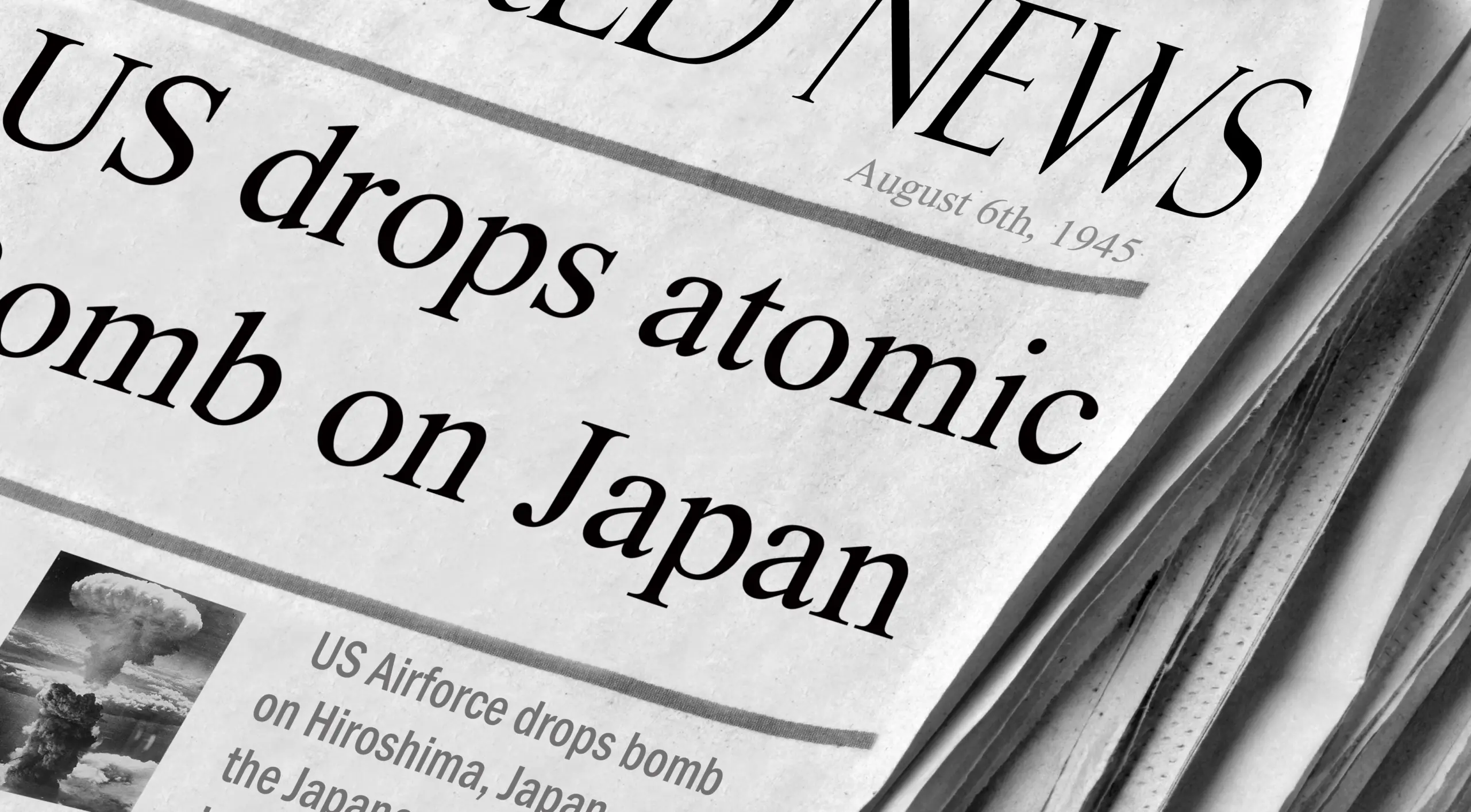
This August, we solemnly mark the 80th anniversary of the atomic bombings of Hiroshima and Nagasaki in Japan in 1945. The bombings are remembered for their catastrophic humanitarian consequences, borne overwhelmingly by the civilians in the cities, as well as many prisoners of war who were forced into labour. While estimates vary, within the first few months the bombings are often estimated to have claimed 140,000 lives in Hiroshima and 73,000 lives in Nagasaki, including those affected by the blast and heat, and the survivors that suffered from acute radiation exposure. More than 210,000 people survived, going on to become the hibakusha (“bomb-affected people”) who today are recognised as leading voices on the global impacts of nuclear weapons. In commemoration of the bombings, BASIC has commissioned a series of articles from Japan and elsewhere. In this the third article to commemorate the anniversary, Professor Kazuko Hikawa — Vice Director at the Research Center for Nuclear Weapons Abolition at Nagasaki University — argues that the blame game must end if the world is to avoid nuclear war.
When it comes to averting nuclear war, the blame game will get us nowhere.
If we truly seek to achieve some form of agreement, maybe the first step should be for all countries to stop accusing each other during their deliberations. What we have experienced in Nagasaki’s efforts to reduce the risks of nuclear war are testament to that.
The city holds the Nagasaki Peace Memorial Ceremony every year on 9 August to commemorate those who died during the atomic bombings and pray for peace.
Normally representatives of all foreign diplomatic missions in Japan are invited to the ceremony. However in 2022, following Russia’s invasion of Ukraine, Nagasaki City decided no longer to invite Russia and Belarus. In 2024 the city also excluded Israel because of its continued attacks on Palestinian civilians.
Nagasaki’s decision was divisive and not well received by the G7 countries who decided not to send their ambassadors to the event because they said it was erroneous to treat Israel on the same level as Russia.
But many people in Nagasaki supported the city’s decision, with numerous sympathetic messages on social media. It seemed as if the public was saying that for them there is no difference between the rights and wrongs of using military force to take the lives of civilians.
“If we are to fulfil our dream and eliminate nuclear weapons today, our insatiable self-interest would only give rise to another weapon equally as destructive as nuclear bombs.”
Such a stance has traditionally been the view of people in Nagasaki – they want to live in a peaceful world where disputes are resolved without the use of force.
All of this comes at a time when the number of people with first-hand experience of Japan’s nuclear bombings continues to dwindle. According to the Ministry of Health, Labour and Welfare, the number of atomic bomb survivors, Hibakusha, was 99,130 as of the end of fiscal year 2024, marking a decrease of 7,695 from the previous year. This decline marks the first time since 1957 that the number has fallen below 100,000. Meanwhile, the average age of Hibakusha was 86.13 years old, a 0.55-year increase.
Their contribution in raising awareness of the dangers of nuclear war cannot be overstated. It was recognised with the award of the Nobel Peace Prize to Nihon Hidankyō, the Japan Confederation of A- and H-Bomb Sufferers Organisations, in December last year. Their tireless efforts have unquestionably ensured that there has been no use of nuclear weapons throughout the 80 years since the end of the Second World War.
As the number of survivors declines, it has become a challenge to remind future generations of the horrors of nuclear war. Efforts are underway, but they are in the experimental stage. There is no escaping the urgency of the situation, with more than 12,000 nuclear weapons in the world today.
There are many explanations as to why these weapons remain, but in my view the problem lies in the structures of societies that allow the pursuit of national self-interest and reliance on the overwhelming power created by nuclear weapons to achieve their objectives. In other words, even if we are to fulfil our dream and eliminate nuclear weapons today, our insatiable self-interest would only give rise to another weapon equally as destructive as nuclear bombs.
In a world that prioritises self-interest and permits dependence on overwhelming power, freedom and dignity are stripped away. Such a world depends on destruction rather than dialogue and cannot be called peaceful.
An Inclusive Peace Memorial Ceremony Once Again
At a press conference held on 08 May, Nagasaki Mayor Suzuki stated that the Peace Memorial Ceremony for 9 August 2025 will once again focus on the two core principles: “Commemorating the victims of the atomic bombings” and “praying for world peace”. As a result, he stated that this year’s event will strive to unite representatives from all nations to Nagasaki, transcending “enmity, borders and differences in ideology and belief… overcoming all divisions”.
To this end, invitations were sent to all countries and regions with diplomatic missions in Japan, including Russia, Belarus, and Israel. They all expressed their intention to participate. I would like to commend Nagasaki City for this decision.
In contrast to the conciliatory and peaceful tone emanating from Nagasaki, this year’s third session of the Preparatory Committee for the 2026 Non-Proliferation Treaty (NPT) Review Conference in New York was not especially cordial. Countries indulged in the blame game, mirroring the second session of the Preparatory Committee last year. My question is this: how can mutual understanding, compromise, or even agreement emerge from these exchanges?
The blame game only serves to promote the exercise of power in support of a particular position and ultimately ends with further conflict and division. Is that what we want?
There is now growing speculation as to whether an agreement will be adopted at the 2026 NPT Review Conference. If countries continue to engage in the blame game, it will be impossible to reach any agreement. It will get us nowhere. If we truly seek to achieve some form of agreement, the first step should be for all countries to stop the blame game. Instead, they should identify what they can individually contribute and enter into meaningful negotiations with each other in good faith.