MAY 2011
The UK should remain a nuclear weapons state for the next 15-20 years. However, Trident like-for-like renewal is too costly and sophisticated. Instead the UK should replicate the US deployment of nuclear weapons on hunter killer submarines.

MAY 2011
The UK should remain a nuclear weapons state for the next 15-20 years. However, Trident like-for-like renewal is too costly and sophisticated. Instead the UK should replicate the US deployment of nuclear weapons on hunter killer submarines.
MAY 2011
The UK will remain a nuclear weapon state, even if it has no operational or stockpiled nuclear weapons or means of delivering them, for as long as the NPT remains in existence. To alter this position, extraordinary legal, political and practical measures would have to be instituted to convince the international community that such a change is genuine and absolute.
MAY 2011
We benefit from the collective security arrangements of the North Atlantic Alliance including a framework of deterrence extended from the US to its European allies. As a result, the future risk of the UK becoming engaged in conflict remains very low. However, we know how unpredictable the international security environment can turn out to be. Looking ahead several decades we could be surprised by new and unforeseen threats; thus, we have no objective justification for seeking major changes today in the collective security that our NATO membership provides.
APRIL 2011
Advocates of Trident replacement argue that the core reason is to deter other states that possess nuclear weapons from engaging in nuclear blackmail. However this does not represent the whole picture as the historical record does not support this view.
MARCH 2011
British nuclear weapons have never had credible independent military value. They were acquired and have been maintained as an expensive exercise in political and diplomatic prestige; primarily to impress and influence allies rather than deter adversaries. Whether that approach was ever worthwhile is questionable, but it is certainly no longer valid.
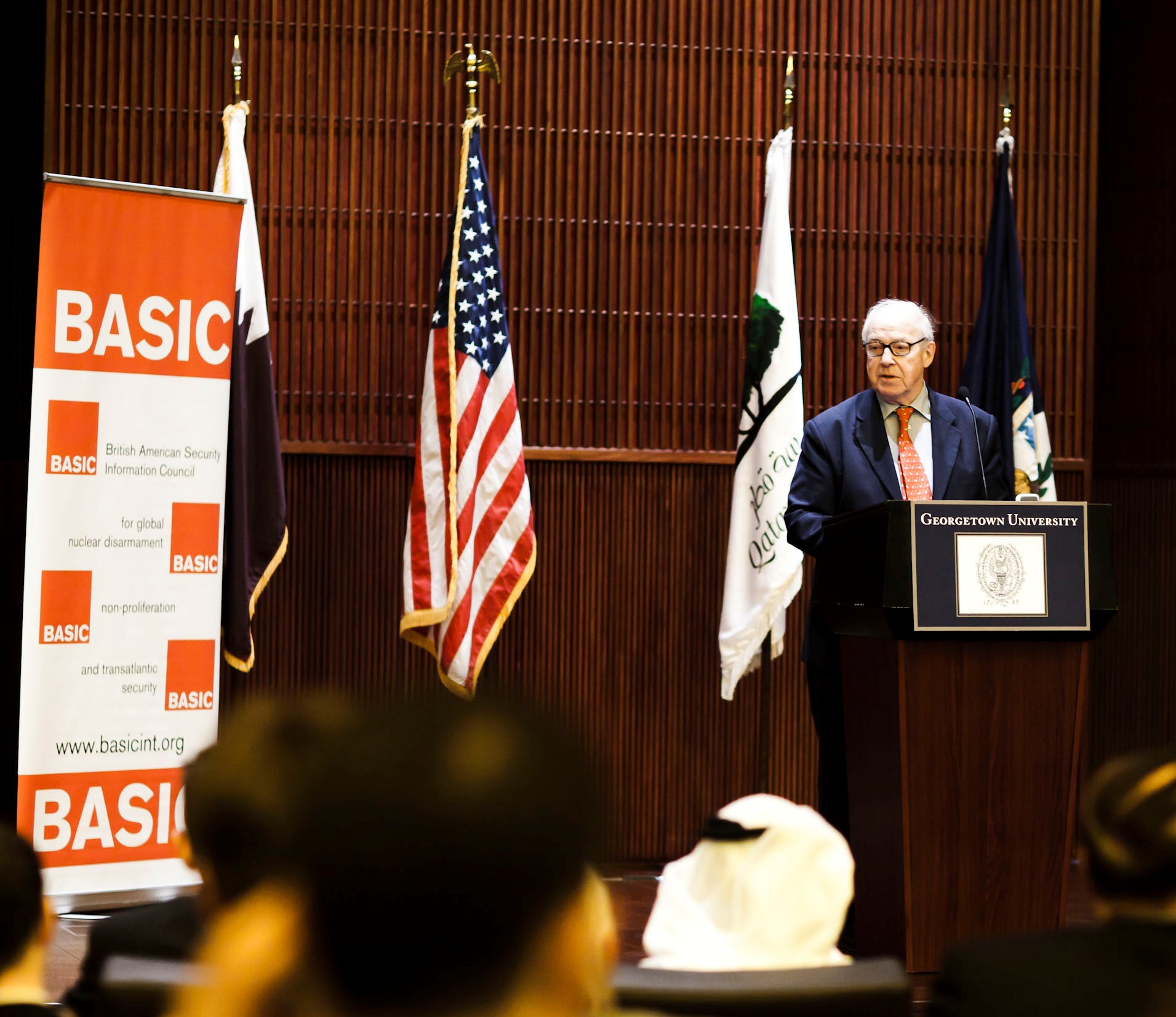
From March 21-22, 2012: BASIC organised a two-day conference at the Georgetown University School of Foreign Service in Qatar, in association with the UK Foreign and Commonwealth Office and the Qatar Ministry of Foreign Affairs.
The BASIC Trident Commission publishes its second discussion paper Wednesday 21 March on the defence industrial aspects of the forthcoming decision on Trident renewal, and in particular the construction of the next generation of SSBN nuclear submarines.
This roundtable workshop in Paris from March 5th-6th was a part of the series of workshops held throughout Europe with the purpose of engaging with officials and experts in discussion on NATO\’s nuclear posture.