
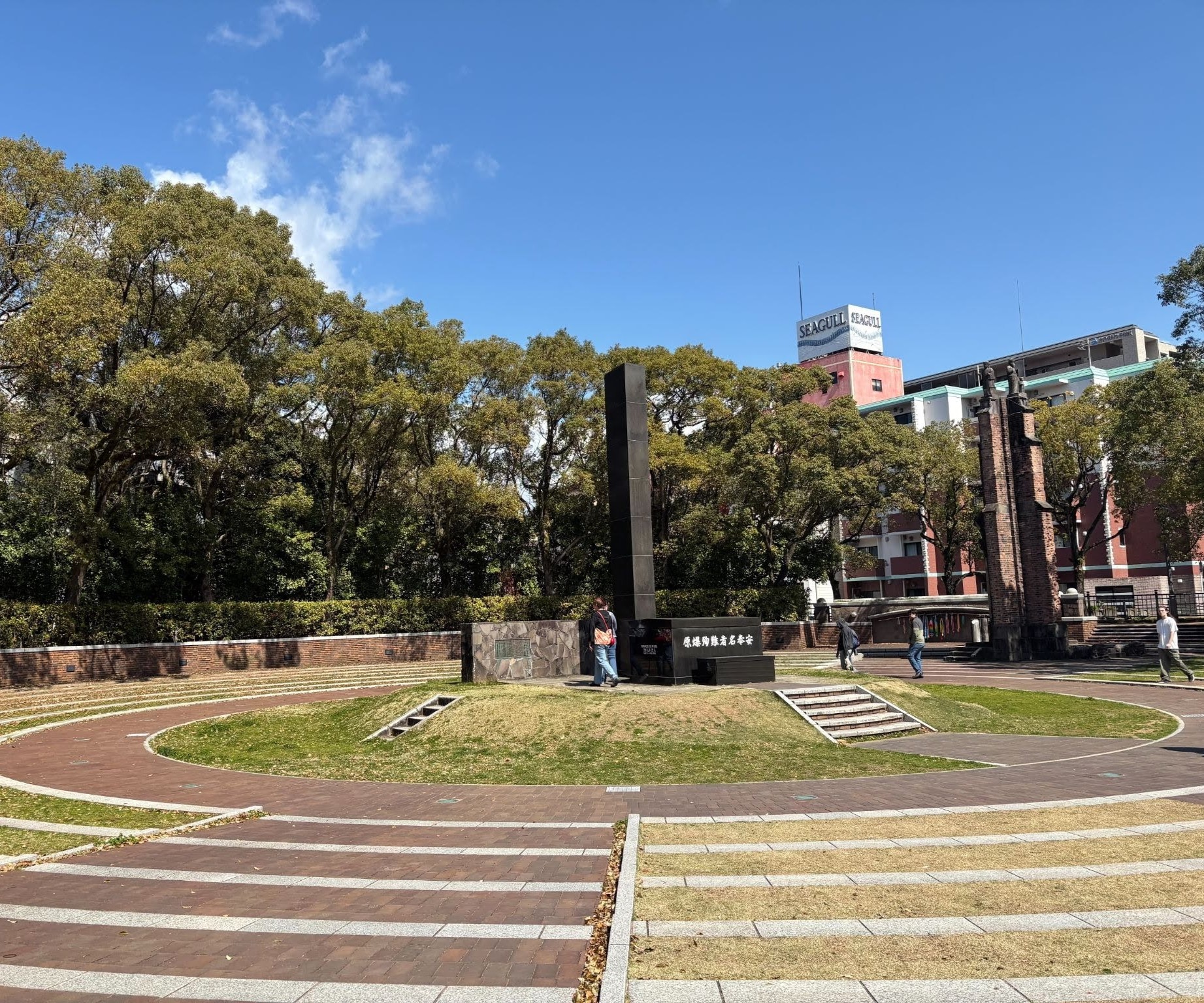
From 12 to 16 March 2026, together with my colleagues I had the honor of accompanying our Emerging Voices Network (EVN) members participating in the project “Assembling Peace Through Dialogue” to Nagasaki. During the trip, participants presented the outcome of eight months of research on nuclear risk, emerging technologies, and intergenerational responsibility.
This project demonstrates the value of bringing together diverse voices, disciplines, and backgrounds to address complex global challenges. It was in Nagasaki, however, that these conversations gained their fullest meaning. As both a site of profound loss and a space of living memory, Nagasaki anchors abstract debates on nuclear risk in human experience, reminding us that policy decisions ultimately affect people, communities, and future generations. Visiting key historical and cultural sites, such as the Peace Park, the National Peace Memorial Hall, and Hypocenter – where the atomic bomb was dropped on 9 August 1945 at 11:02 AM – brought a deeper awareness of the human consequences of nuclear weapons use, something that cannot be fully captured through books alone.
One of the most meaningful moments was meeting Ms Matsumoto, an 83-year-old “Hibakusha” (atomic bomb survivor). At the age of 80, she made the remarkable decision to learn English so that she could share her testimony with a wider international audience. Her determination, resilience, and generosity in recounting her childhood were deeply moving. What stood out the most was not only her strength in talking about the challenges she faced at such a young age but the hope she has for younger generations to carry forward the responsibility of ensuring that nuclear weapons are never used again.
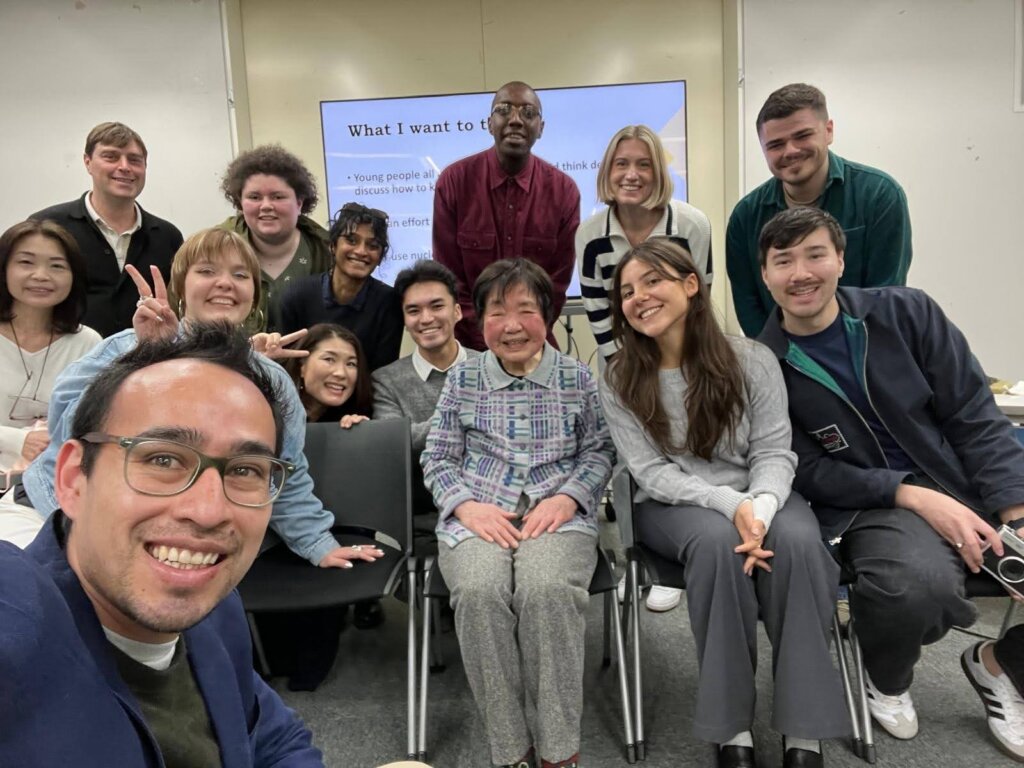
“Make an effort not to have wars again” is a message she shared that continues to resonate with me. As simple as it may sound, this statement carries immense weight. In today’s geopolitical climate, where geopolitical tensions are rising and conflicts are often framed as inevitable or even necessary, her words serve as a powerful reminder of the human costs that lie behind such narratives. Too often, war is perceived as a “quick” or “practical” solution to complex challenges. Yet both historical and current events demonstrate that violence does not lead to sustainable outcomes, nor to lasting peace.
If there is one lesson I take away from this experience, it is on the importance of sustained and inclusive dialogue as a cornerstone of peace. Visiting Nagasaki and engaging directly with a Hibakusha reinforced the urgency of learning from the past and keeping these stories alive as a guide for future policy choices. As the number of first generation Hibakusha continues to decline, this responsibility becomes even more pressing. In this context, the final project report’s exploration of kataribe, the Japanese tradition of oral storytelling, offers a particularly powerful contribution. Preserving these testimonies is not simply about remembering the past but about shaping how we choose to act in the present.